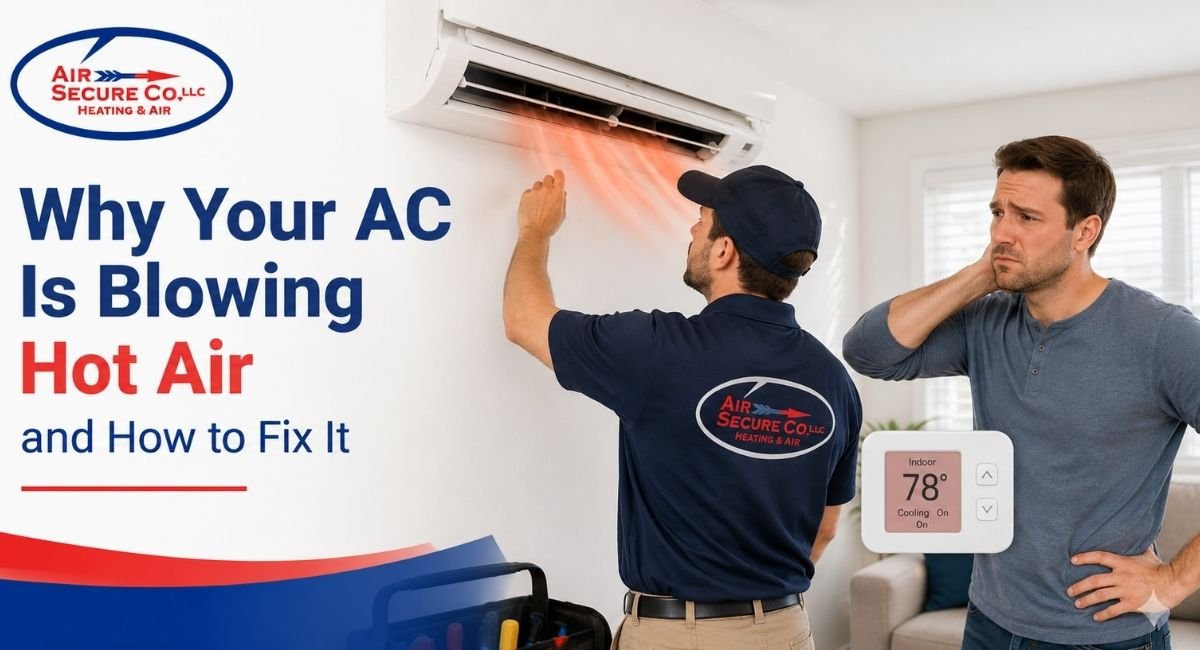
An AC not cooling properly is one of the most frustrating problems homeowners experience during hot weather. In many cases, the system still sounds normal and air continues flowing through the vents, yet the house never reaches the desired temperature. Instead of cool airflow, homeowners notice warm air coming from vents, uneven temperatures, or an air conditioner blowing not cold air.
When an AC running but not cooling happens, the issue is usually connected to a disruption somewhere inside the cooling cycle. Thermostat issues, airflow restrictions, refrigerant leak problems, dirty condenser coils, or electrical failures can all reduce cooling performance.
An air conditioner does not actually create cold air. It removes heat from indoor air and transfers that heat outside the home. If any stage of this process becomes restricted, the system may continue operating while the indoor temperature keeps rising.
Many homeowners first notice reduced airflow or longer cooling cycles before the system completely stops cooling. Addressing these warning signs early can help avoid larger repair costs and unnecessary strain on the HVAC system.
Homeowners looking for long-term system performance often combine repairs with preventive care through services like HVAC maintenance and tune-up support or professional AC repair solutions.
What It Means When Your AC Is Blowing Warm Air
Warm air from an AC does not always mean the entire unit has failed. Most residential cooling systems rely on three main processes working together:
- Proper indoor airflow
- Refrigerant circulation
- Outdoor heat release
If one part of the cycle becomes weak, cooling performance begins to decline. This is why many homeowners experience issues such as:
- AC does not get cold
- Home AC unit not blowing cold air
- Air conditioner runs but no cooling
- AC not cooling house evenly
In many situations, cooling loss develops gradually rather than happening suddenly. A clogged air filter, low refrigerant pressure, or weak airflow around the outdoor unit can slowly reduce efficiency over time.
Why Ignoring an AC Not Cooling Can Create Bigger Problems
A common mistake homeowners make is continuing to run the system even after warm airflow starts. Although the AC may still appear functional, operating it in this condition can increase stress on critical components.
Over time, this may lead to frozen evaporator coils, compressor overheating, higher electricity usage, and complete system shutdown. What starts as a small airflow issue can eventually become a much more expensive repair.
Routine maintenance plays a major role in preventing these problems. Scheduling regular maintenance through professional HVAC tune-up services helps identify refrigerant issues, electrical wear, and airflow restrictions before they become severe.
Common Reasons Why Your AC Is Blowing Hot Air
Thermostat Settings or Calibration Problems
Thermostat issues are among the most common causes of an AC not functioning correctly. Incorrect settings can make the system circulate air without activating the cooling cycle.
One common issue is when the fan is set to ON instead of AUTO. In this mode, the fan continues moving air even when the compressor is not cooling, which often feels like warm air coming through the vents.
Weak thermostat batteries, incorrect temperature settings, or faulty sensors may also prevent the system from cooling properly.
Dirty Air Filters Restricting Airflow
Clogged filters significantly reduce airflow inside the system. When airflow becomes restricted, the evaporator coil cannot absorb heat effectively.
This often causes:
- Weak airflow
- Uneven cooling
- Longer system cycles
- Ice buildup on indoor coils
- Reduced cooling performance
Replacing air filters regularly is one of the easiest ways to prevent a home AC not cooling issue.
Low Refrigerant or Refrigerant Leak
Refrigerant is responsible for removing heat from indoor air. If refrigerant levels become low because of a refrigerant leak, the system loses its ability to cool efficiently.
Most refrigerant problems develop gradually. Homeowners may notice the AC running longer while producing less cooling over time.
Signs of refrigerant problems often include ice buildup on refrigerant lines, hissing sounds near the system, or an AC not cooling house evenly.
Professional inspection is required because the leak must be repaired before refrigerant is added back into the system.
Dirty Outdoor Condenser Unit
The outdoor condenser releases heat collected from inside the home. When dirt, leaves, or debris block airflow around the condenser, heat cannot escape efficiently.
This forces the compressor to work harder and often leads to warm air inside the house.
Keeping the outdoor unit clean and maintaining clear airflow around it can improve overall cooling efficiency.
Compressor or Electrical Failure
The compressor is one of the most important components in the cooling system. If it fails, refrigerant can no longer circulate properly.
Electrical problems such as failed capacitors, relay issues, or wiring damage can also stop the cooling process even though the fan continues running.
These problems usually require professional HVAC diagnosis because they involve internal electrical and mechanical components.
AC Blowing Hot Air Diagnosis Table
| Symptom | Likely Cause | Severity |
| Weak airflow with warm air | Dirty air filter | Low |
| Fan running but no cooling | Thermostat issue | Low |
| Ice on indoor coil | Low refrigerant | High |
| Outdoor unit overheating | Dirty condenser | Medium |
| No cooling at all | Compressor failure | High |
Why Your AC Runs but Does Not Cool the Room
In some situations, the system appears fully operational but indoor temperatures continue rising. This usually means heat transfer is not happening effectively.
Common causes include airflow restrictions, refrigerant imbalance, poor insulation, duct leakage, or weak compressor performance.
Even properly functioning systems can struggle if the unit size does not properly match the home. Homeowners evaluating long-term cooling efficiency often explore heating and cooling product options when comparing upgrade solutions.
If your system frequently struggles during peak summer temperatures, it may help to review signs you need a new AC installation instead of repair, compare top AC installation choices, or understand expected AC installation costs before deciding between repair and replacement.
Step-by-Step Troubleshooting for an AC Not Cooling
Before calling a technician, homeowners can perform a few simple checks.
Start by verifying the thermostat is set to COOL mode and that the fan is set to AUTO. Next, inspect the air filter and replace it if it appears dirty. The outdoor condenser should also be checked for debris or airflow blockage.
It is also important to confirm that circuit breakers have not tripped and that both indoor and outdoor units are receiving power.
If the system still produces warm air after these checks, the issue is likely internal and requires professional diagnosis.
For urgent cooling problems during extreme temperatures, homeowners often rely on emergency HVAC repair services or professional air conditioning repair specialists to restore cooling quickly.
When Repair Is Better Than Waiting
Some AC problems are minor and inexpensive to fix, while others indicate long-term system wear.
If your system is older than 12 to 15 years, develops repeated refrigerant leaks, or experiences frequent cooling failures, replacement may become more cost-effective than continued repairs.
Homeowners facing repeated breakdowns also benefit from reviewing emergency AC repair planning guides before deciding on major repairs or replacement.
Preventing Your AC from Blowing Hot Air Again
Most cooling issues can be prevented through regular maintenance and airflow management.
Filters should be replaced consistently, outdoor units should remain free of debris, and vents should stay unobstructed throughout the home. Seasonal tune-ups help identify developing issues before they lead to major breakdowns.
Professional HVAC maintenance and repair services can significantly improve long-term cooling performance and energy efficiency.
Indoor Air Quality and Cooling Performance
Indoor air quality directly affects HVAC performance. Dust buildup, humidity imbalance, and clogged duct systems force the AC to work harder to maintain temperature.
Common warning signs include musty smells, excessive humidity, uneven cooling, and frequent filter clogging.
Many homeowners improve both comfort and airflow efficiency with professional indoor air quality solutions designed to support healthier airflow and better system performance.
Getting Your AC Back to Cool
Understanding why your AC is blowing hot air and how to fix it starts with identifying the root cause rather than only treating symptoms.
Simple issues such as dirty filters, thermostat settings, or blocked outdoor units can often be corrected quickly. However, refrigerant leaks, compressor damage, and electrical failures typically require professional HVAC repair.
Whether you are dealing with an AC not cooling, warm air from vents, or a home AC unit not blowing cold air, early diagnosis can help prevent larger repairs and extend the life of the system.
Air Secure Inc provides repair, maintenance, installation, and emergency HVAC support designed to keep residential cooling systems operating efficiently throughout the year.
Air Secure Inc provides residential HVAC repair, maintenance, installation, and indoor air quality solutions designed to keep cooling systems operating efficiently throughout the year.