Choosing the right cooling system in a humid and long-summer climate is not only about comfort, it directly affects monthly electricity bills, indoor air quality, and long-term home value. If you are searching for the right energy-efficient AC that North Carolina homes can rely on, the decision goes beyond picking a popular brand or the lowest price.
In many homes across North Carolina, cooling systems run for nearly half the year due to extended heat and humidity. That means even small efficiency differences can translate into hundreds of dollars in annual savings. Homeowners often notice this after installation, especially when comparing older units with modern inverter-driven or high-SEER systems.
Before choosing a system, it helps to understand how local HVAC services approach efficiency planning. For example, professional insights on system sizing and installation costs can be seen in guides like AC installation cost in Chapel Hill NC and seasonal preparation recommendations shared in the seasonal HVAC maintenance checklist. These resources highlight how efficiency is not only about equipment, but also about planning, installation quality, and upkeep.
This guide walks through everything in a practical, experience-based way so you can make informed decisions without confusion.
Why Energy Efficiency Matters More in North Carolina Homes
North Carolina has a climate that places continuous stress on cooling systems. Summers are long, humidity levels remain high for weeks, and temperature swings between day and night make it harder for older systems to maintain stability.
An inefficient air conditioner does not always fail loudly. In most cases, it quietly increases electricity usage while still cooling the home. That is why many homeowners only notice the issue when utility bills rise.
Key climate factors affecting AC performance:
- Extended cooling season from late spring to early fall
- High humidity that forces AC systems to work harder for moisture removal
- Coastal regions with salt-air exposure affecting components
- Inland areas with heat retention in homes and attics
- Frequent demand cycles during peak afternoon hours
Humidity plays a particularly important role. A system that only cools temperature but fails to manage moisture leads to discomfort even at lower thermostat settings. This is where properly designed energy efficient HVAC systems become important, especially those with better dehumidification control.
Homes that combine modern cooling equipment with proper servicing, such as through HVAC maintenance tune-up service, tend to maintain stable performance across the entire season.
What Actually Makes an Air Conditioner Energy Efficient
Many homeowners assume efficiency is only about buying a newer unit. In reality, energy efficiency is a combination of design, installation quality, and usage patterns.
1. SEER Ratings and Real Performance
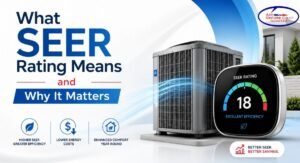
SEER (Seasonal Energy Efficiency Ratio) measures cooling output versus energy consumption. Higher SEER values generally indicate better efficiency, but real-world performance depends on installation and environment.
2. Inverter Technology
Traditional AC systems turn on and off repeatedly. Inverter systems adjust compressor speed based on cooling demand, which reduces energy spikes and improves consistency.
3. Variable-Speed Compressors
These systems adjust output gradually instead of operating at full capacity only. This leads to better humidity control and reduced wear on components.
4. Correct System Sizing
Sizing is one of the most overlooked factors. An oversized system cools too quickly and shuts off frequently, while an undersized system runs constantly.
5. Airflow and Indoor Quality Integration
Efficiency also depends on airflow balance and duct condition. Poor indoor air quality or blocked ducts reduce system performance. Solutions like indoor air quality IAQ solutions directly support system efficiency.
Types of Energy Efficient Air Conditioning Systems
Different home layouts require different cooling approaches. Below are the most effective system types for North Carolina conditions.
High SEER Central Air Conditioning Systems
These are common in full-home installations and remain one of the most balanced options for larger properties.
Typical characteristics:
- SEER ratings are often between 16 and 24
- Strong whole-home cooling coverage
- Compatible with smart thermostats
- Better humidity control when properly sized
Best suited for:
- Larger homes
- Families with consistent cooling needs
- Homes with existing ductwork
Ductless Mini Split Systems
Mini splits are increasingly popular in homes where zoning control matters.
Advantages:
- No duct energy loss
- Independent room control
- Easier installation in older homes
- High efficiency in smaller zones
These systems are particularly useful for additions, garages, or rooms with uneven cooling.
Inverter-Based Cooling Systems
Inverter technology is one of the most important developments in modern HVAC systems.
Key benefits:
- Reduced energy spikes
- Stable indoor temperatures
- Better humidity control
- Lower long-term electricity consumption
Smart HVAC Systems
Smart systems integrate with home automation and allow remote control of temperature settings.
Features:
- App-based temperature adjustment
- Learning behavior patterns
- Energy usage tracking
- Scheduling automation
Choosing the Right AC Size for Efficiency
System size directly impacts energy use and comfort. A correct cooling load calculation ensures the system operates within its ideal range.
Factors that influence sizing:
- Total square footage
- Ceiling height variations
- Insulation quality
- Window placement and sun exposure
- Number of occupants
Common sizing issues
- Oversized systems short cycle and waste energy
- Undersized systems struggle during peak heat
- Incorrect duct design reduces airflow efficiency
Homeowners often correct sizing issues during replacement decisions, especially when reviewing whether repair or replacement is better through guides like signs you need a new AC installation instead of repair.
SEER Ratings Explained in Practical Terms
SEER ratings are often misunderstood as the only measure of efficiency. While important, they must be considered alongside real-world usage.
| SEER Rating | Efficiency Level | Typical Usage Suitability |
| 13–15 | Basic efficiency | Older homes or budget systems |
| 16–18 | Good efficiency | Most residential homes |
| 19–21 | High efficiency | Larger homes with heavy usage |
| 22+ | Premium efficiency | Smart homes and high-demand climates |
Higher SEER systems usually cost more upfront but can reduce long-term operating costs, especially in humid regions where cooling demand is constant.
Cost vs Long-Term Savings: Real Perspective
Many homeowners focus only on installation cost, but long-term energy consumption often matters more.
A properly selected energy efficient AC North Carolina system can:
- Reduce monthly electricity usage
- Improve humidity comfort without lowering temperature excessively
- Extend equipment lifespan due to reduced strain
- Lower repair frequency over time
However, installation quality plays a major role. Poor installation can reduce efficiency by up to 30% even in high-end systems. That is why professional planning and maintenance guidance, such as through air conditioning service Cary NC, is essential for performance stability.
Maintenance and Its Direct Impact on Efficiency
Even the best system loses efficiency without regular maintenance. Dust buildup, coil issues, and airflow restrictions can significantly increase energy consumption.
Essential maintenance actions:
- Regular filter replacement
- Coil cleaning before peak summer
- Refrigerant level checks
- Seasonal system tune-ups
- Duct inspection for leaks
A structured approach like the seasonal HVAC maintenance checklist helps ensure no step is missed during peak and off-seasons.
Maintenance is not just repair prevention, it directly impacts efficiency levels over time. Studies across HVAC service reports show that maintained systems consume noticeably less electricity compared to neglected ones.
Energy Saving Strategies Beyond Equipment Choice
Efficiency is not only about the system itself. Home behavior and building condition also matter.
Practical ways to improve cooling efficiency:
- Keep blinds closed during peak sunlight hours
- Seal air leaks around doors and windows
- Use ceiling fans to support airflow
- Avoid extreme thermostat changes
- Schedule regular HVAC inspections
Proper maintenance also reduces unnecessary energy loss, which is often highlighted in guides like AC maintenance savings reduce energy bills.
When Replacement Becomes a Better Choice
There comes a point where repair is no longer cost-effective. Older systems often lose efficiency even after servicing.
Common indicators include:
- Frequent breakdowns during summer
- Rising electricity bills despite maintenance
- Uneven cooling across rooms
- System age above 10 to 15 years
In such cases, replacement becomes a practical long-term decision rather than repeated repairs. Installation planning should also include cost analysis and efficiency projections.
Table: System Comparison for North Carolina Conditions
| System Type | Efficiency Level | Best Use Case | Humidity Control |
| Central AC | High | Whole-home cooling | Strong |
| Mini Split | Very High | Zoned rooms | Moderate to strong |
| Inverter AC | Very High | Continuous usage homes | Excellent |
| Smart HVAC | High to Very High | Tech-integrated homes | Strong |
Building Long-Term Cooling Efficiency
Selecting the right energy efficient AC North Carolina homeowners depend on is a combination of system selection, proper installation, and ongoing maintenance. No single factor guarantees efficiency on its own.
Homes that perform best in humid climates usually combine:
- Proper system sizing
- High-efficiency inverter or SEER-rated systems
- Consistent seasonal maintenance
- Balanced indoor airflow management
For homeowners planning upgrades or new installations, professional guidance can make a noticeable difference in both comfort and cost. You can explore trusted HVAC services, system options, and maintenance support through Air Secure Inc services, which provides installation, repair, and efficiency-focused HVAC solutions across North Carolina.
A well-planned system does more than cool your home. It stabilizes comfort, reduces unnecessary energy waste, and supports long-term savings throughout the year.