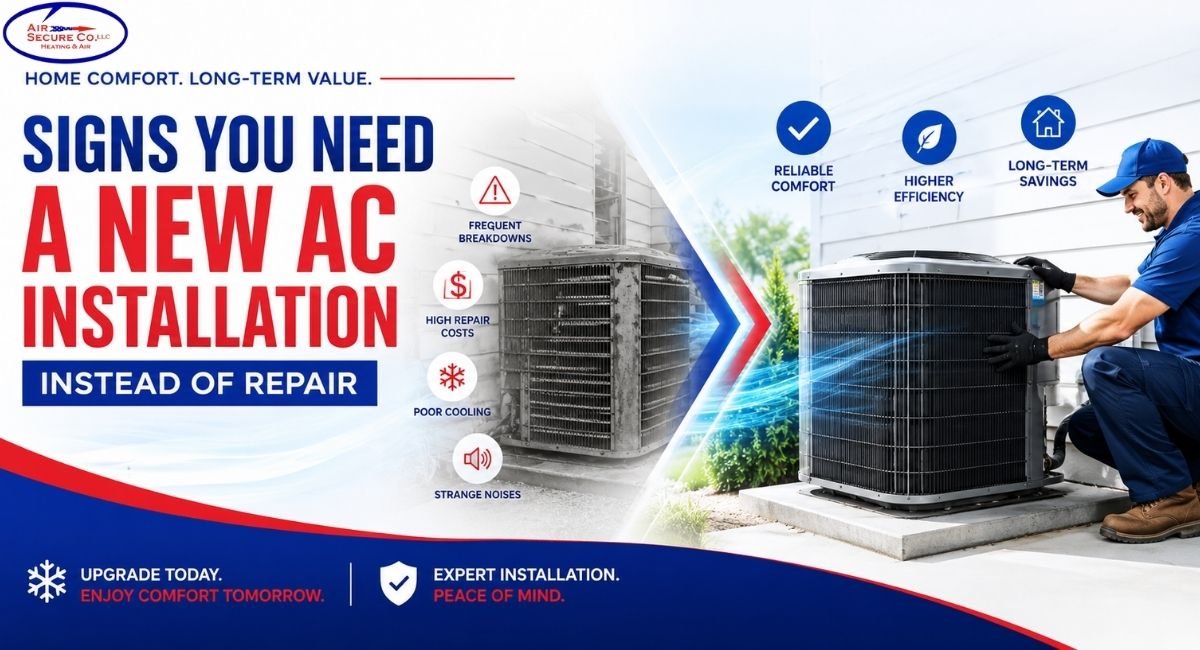
A failing air conditioner rarely stops working without warning. In many homes, the signs begin slowly. Rooms take longer to cool, energy bills rise month after month, strange sounds become more frequent, and repairs start adding up faster than expected. At first, most homeowners assume another quick fix will solve the issue. In some situations, that is true. But there comes a point when continuing repairs no longer makes financial or practical sense.
The debate around AC installation vs repair is common among homeowners dealing with an aging cooling system. Many people hold onto older units because they still run occasionally, even when performance continues to decline. Others spend money on repeated service calls hoping to squeeze another season out of the equipment. Unfortunately, delaying replacement too long can lead to higher utility costs, reduced indoor comfort, poor air quality, and expensive emergency breakdowns during the hottest part of the year.
If your cooling system has been struggling recently, paying attention to the warning signs can help you avoid larger problems later. In many cases, replacing the system early actually saves money over time compared to constant repairs.
Homeowners comparing long-term cooling costs often review topics such as AC installation cost factors before deciding whether to repair or replace an older unit. Scheduling regular HVAC maintenance and tune-up service can also help identify hidden problems before they turn into complete system failure.
This guide explains the most common HVAC replacement signs, how to tell when repairs are no longer worth it, and what to consider before investing in a new system.
Why Homeowners Delay Replacing an AC System
Most people do not replace an air conditioner until they absolutely have to. That hesitation is understandable. A new installation is a significant investment, and homeowners naturally want to get the longest life possible from their current equipment.
However, many older cooling systems create hidden costs that are easy to overlook. Frequent repairs, high utility bills, inconsistent cooling, humidity problems, and uncomfortable indoor temperatures all affect daily life. When these issues continue year after year, the total cost of ownership often becomes far higher than expected.
Some homeowners continue repairing an aging unit because:
- The system still turns on occasionally
- Repairs seem cheaper in the short term
- They are unsure how long an AC unit should last
- They do not know the warning signs of system failure
- They worry about installation costs
- They assume all cooling systems perform the same
The problem is that older systems usually become less efficient long before they stop working entirely. A unit can still cool the home while quietly wasting energy and struggling to maintain comfort.
Knowing when to replace AC unit equipment instead of repairing it can prevent ongoing frustration and unnecessary spending.
How Long Should an Air Conditioner Last?
Most residential air conditioning systems last between 10 and 15 years when properly maintained. Some systems survive longer, especially if they receive routine service and operate under moderate conditions.
However, climate, maintenance history, installation quality, and usage patterns all affect lifespan.
Homes in warmer and humid regions often place heavier demand on cooling equipment. Systems that run for long hours throughout the year naturally experience more wear on compressors, motors, coils, and electrical components.
Poor maintenance shortens lifespan even further. Dirty filters, clogged coils, refrigerant issues, and neglected inspections force the system to work harder than necessary.
If your unit is approaching or exceeding the 10 to 15 year range and showing performance issues, replacement may be more practical than continued repairs.
Common Signs You Need a New AC Installation Instead of Repair
Some warning signs are minor and repairable. Others indicate deeper mechanical or efficiency problems that point toward replacement.
Here are the most important broken AC symptoms homeowners should not ignore.
Your Energy Bills Keep Increasing
One of the earliest signs of a failing AC system is rising electricity costs.
As systems age, components wear down and efficiency drops. The unit must work harder and run longer to produce the same level of cooling. Even if the home temperature eventually feels comfortable, the system may consume significantly more electricity getting there.
Homeowners often notice:
- Higher summer utility bills
- Longer cooling cycles
- Constant thermostat adjustments
- AC running almost nonstop
- Increased strain during hotter afternoons
Older units with low SEER ratings are especially expensive to operate compared to modern high-efficiency systems.
If your energy bills continue rising despite normal usage habits, comparing AC installation vs repair costs becomes important. A new energy-efficient system can lower monthly operating expenses and reduce stress on the electrical system.
Repairs Are Becoming Frequent
Every air conditioner eventually needs service. Occasional repairs are normal.
The problem begins when repairs become frequent and expensive.
If you have replaced capacitors, contactors, refrigerant components, motors, or electrical parts multiple times within a short period, the system may be reaching the end of its service life.
Common signs include:
- Multiple service calls within one or two years
- Repairs costing hundreds or thousands of dollars
- New problems appearing shortly after old ones are fixed
- Repeated refrigerant leaks
- Compressor issues
- Electrical failures
A useful guideline many homeowners follow is the repair cost rule. If the repair expense multiplied by the age of the unit exceeds the value of replacement, investing in a new system may make more sense financially.
For example:
| AC Age | Repair Cost | Likely Better Choice |
| 5 years | $250 | Repair |
| 12 years | $1,000 | Replacement |
| 15 years | $1,500 | Replacement |
While every situation differs, repeated repairs often indicate larger internal wear throughout the system.
Uneven Cooling Throughout the Home
Do some rooms feel comfortable while others stay hot and humid?
Uneven temperatures often signal declining system performance.
This problem may result from:
- Failing blower motors
- Aging compressors
- Ductwork issues
- Low refrigerant
- Incorrect system sizing
- Poor airflow
In some cases, repairs can solve the issue. But when an older unit repeatedly struggles to maintain consistent temperatures, replacement may provide better long-term comfort.
Modern systems cool homes more evenly because they use improved airflow technology, variable speed motors, and higher efficiency compressors.
Your AC Uses R-22 Refrigerant
Older cooling systems commonly use R-22 refrigerant, often called Freon.
Production of R-22 has been phased out, making it expensive and difficult to obtain. If your system develops a refrigerant leak and still relies on R-22, repairs can become extremely costly.
Homeowners are often surprised by how expensive refrigerant repairs become on older units.
Signs your system may use outdated refrigerant include:
- AC system older than 10 to 15 years
- Frequent refrigerant leaks
- Weak cooling performance
- Rising repair costs
Replacing the system often becomes the smarter long-term option instead of continuing expensive refrigerant-related repairs.
The System Struggles During Hot Weather
An air conditioner should maintain comfortable indoor temperatures even during hotter days.
If your AC constantly falls behind when outdoor temperatures rise, the system may no longer have enough capacity to cool the home effectively.
Homeowners may notice:
- Indoor temperatures climbing in the afternoon
- AC running nonstop
- Poor humidity control
- Weak airflow from vents
- Longer recovery time after thermostat adjustments
Aging systems lose cooling efficiency gradually over time. What once worked efficiently may now struggle to meet the home’s cooling demands.
This is especially common when homes have undergone renovations, added square footage, or insulation changes that increased cooling requirements.
Strange Noises Are Becoming Common
Air conditioners naturally make some operational sounds, but loud or unusual noises should never be ignored.
Common warning sounds include:
- Grinding
- Banging
- Squealing
- Buzzing
- Clicking
- Rattling
These sounds often indicate worn motors, loose components, compressor problems, or internal damage.
While some repairs are straightforward, recurring noises in older systems usually suggest broader wear across multiple parts.
When major components begin failing together, replacement becomes more practical than repeated repairs.
Indoor Humidity Feels Uncomfortable
A properly functioning air conditioner does more than cool the air. It also removes excess humidity.
When an aging system loses efficiency, indoor humidity often increases.
Homeowners may notice:
- Sticky indoor air
- Damp feeling rooms
- Condensation around vents
- Musty odors
- Increased mold risk
High humidity affects comfort levels even when temperatures appear normal on the thermostat.
Modern systems generally provide better moisture control, helping improve overall indoor comfort and air quality.
Homeowners concerned about indoor comfort often combine system upgrades with indoor air quality solutions to reduce allergens, humidity problems, and airborne contaminants.
Your AC Needs Constant Thermostat Adjustments
If you regularly change thermostat settings trying to stay comfortable, your system may be losing efficiency.
Homeowners sometimes compensate for weak cooling by lowering the thermostat several degrees below normal.
This forces the unit to run longer while still delivering disappointing results.
Signs include:
- Thermostat constantly being adjusted
- Home never feeling cool enough
- Long cooling cycles
- Temperature swings throughout the day
A properly sized and functioning system should maintain steady comfort without constant adjustments.
The Compressor Is Failing
The compressor is one of the most expensive AC components.
When compressor failure occurs in an older unit, replacement often becomes the more practical option.
Compressor problems may include:
- Loud startup noises
- Warm air from vents
- System shutting down unexpectedly
- Hard starting issues
- Tripped breakers
Replacing a compressor on an aging unit can cost a substantial portion of a full system replacement.
If the unit already has efficiency problems or other repair history, investing that money into a new installation usually provides better long-term value.
Your Home Still Feels Uncomfortable After Repairs
One of the clearest HVAC replacement signs is when the system continues underperforming even after repairs.
If technicians repeatedly fix issues but comfort problems return shortly afterward, the unit may simply be worn out.
This situation frustrates many homeowners because:
- Repairs temporarily help
- Problems quickly return
- Comfort never fully improves
- Utility bills remain high
- Confidence in the system disappears
At this point, replacing the unit can restore reliability and peace of mind.
Poor Airflow From Vents
Weak airflow is another sign the system may be failing.
Possible causes include:
- Blower motor problems
- Clogged evaporator coils
- Ductwork issues
- Aging internal components
- Compressor inefficiency
While some airflow issues are repairable, severe airflow decline in older systems often points toward broader mechanical deterioration.
If airflow problems continue despite maintenance and repairs, replacement may provide a more permanent solution.
The System Turns On and Off Constantly
Short cycling occurs when the AC turns on and off frequently without completing a proper cooling cycle.
This creates excessive wear on components and increases energy consumption.
Short cycling may result from:
- Incorrect system sizing
- Electrical issues
- Thermostat problems
- Compressor failure
- Refrigerant problems
Persistent short cycling in older systems frequently indicates replacement is approaching.
Signs Repairs Still Make Sense
Not every AC issue means you need a new installation.
In many situations, repairs remain the most reasonable option.
Repairing the system may make sense when:
- The unit is relatively new
- Problems are minor
- Repair costs are low
- The system has been maintained consistently
- Energy efficiency remains good
- Performance issues are isolated
Examples of repair-friendly problems include:
- Faulty capacitors
- Thermostat replacement
- Minor electrical repairs
- Drain line cleaning
- Fan motor replacement
- Sensor issues
A trusted HVAC professional can evaluate whether repair or replacement offers the better long-term value.
AC Installation vs Repair: Cost Comparison
Homeowners often focus only on immediate costs when comparing repair and replacement.
However, long-term expenses matter just as much.
A cheaper repair today may lead to:
- More future breakdowns
- Higher utility bills
- Reduced comfort
- Emergency repair costs
- Ongoing maintenance expenses
A new system requires a larger upfront investment but may provide:
- Lower monthly energy bills
- Better indoor comfort
- Improved humidity control
- Fewer repairs
- Better air quality
- Quieter operation
- Manufacturer warranty protection
Here is a general comparison homeowners often consider:
| Factor | Repair Existing Unit | New AC Installation |
| Upfront Cost | Lower | Higher |
| Energy Efficiency | Lower | Higher |
| Future Repairs | More Likely | Less Likely |
| Indoor Comfort | Inconsistent | Improved |
| Warranty Coverage | Limited | Often Included |
| Long-Term Savings | Lower | Higher |
The best decision depends on system age, repair history, efficiency, and overall home comfort.
Benefits of Replacing an Older AC System
A new installation offers more than just colder air.
Modern cooling systems provide major improvements in comfort, efficiency, and indoor air quality.
Better Energy Efficiency
New systems use less electricity while delivering stronger cooling performance.
Higher SEER ratings help reduce energy consumption during hot weather, especially in homes where cooling systems run for extended hours.
Lower monthly utility costs can offset part of the installation investment over time.
Improved Indoor Comfort
Modern systems cool homes more evenly and maintain steadier temperatures.
Features such as variable-speed motors help reduce temperature swings and improve airflow.
Quieter Operation
Older systems often become noisy as components wear out.
Newer units typically operate much more quietly, improving comfort indoors and outdoors.
Better Humidity Control
Humidity management is essential for indoor comfort.
Modern AC systems remove moisture more effectively, helping reduce sticky indoor conditions.
Fewer Emergency Repairs
Replacing an aging unit reduces the likelihood of unexpected breakdowns during extreme weather.
This can prevent stressful emergency service calls and sudden repair expenses.
Improved Air Quality
Older systems may circulate dust, allergens, and humidity problems throughout the home.
Upgraded equipment paired with proper filtration can improve indoor air quality significantly.
How Improper Installation Creates Future Problems
Even the best air conditioner can perform poorly if installation quality is poor.
Incorrect installation can lead to:
- Reduced efficiency
- Poor airflow
- Uneven cooling
- Short cycling
- Higher energy bills
- Premature equipment wear
Proper system sizing is especially important.
Oversized systems cool the home too quickly without removing enough humidity.
Undersized systems struggle continuously and wear out faster.
Working with experienced HVAC professionals helps ensure the system is matched correctly to the home’s cooling requirements.
Homeowners researching replacement options often review available heating and cooling products to compare efficiency ratings, equipment features, and system performance before making a final decision.
Common Questions to Ask Before Replacing Your AC
Before investing in a new installation, homeowners should ask several important questions.
How old is the current system?
Age helps determine whether additional repairs make financial sense.
How often does the system need repairs?
Frequent breakdowns usually signal declining reliability.
Are energy bills increasing?
Efficiency loss often becomes visible through rising utility costs.
Does the home cool evenly?
Inconsistent temperatures may indicate sizing or airflow problems.
Is the refrigerant outdated?
Older refrigerants can increase future repair expenses.
Are indoor humidity levels uncomfortable?
Humidity problems often point toward declining cooling performance.
Will a repair solve the root problem?
Temporary fixes may not address broader system deterioration.
The Hidden Cost of Waiting Too Long
Many homeowners delay replacement until complete failure occurs.
Unfortunately, waiting too long often creates additional problems.
An older failing system can:
- Break down during extreme heat
- Increase emergency repair costs
- Create indoor comfort issues
- Damage electrical components
- Raise monthly utility expenses
- Reduce indoor air quality
Planning replacement before total failure gives homeowners more time to compare options, choose efficient equipment, and schedule installation conveniently.
Emergency replacement situations often limit choices and increase stress.
Maintenance Still Matters After Installation
A new air conditioner still requires routine maintenance.
Proper maintenance helps:
- Preserve efficiency
- Reduce wear
- Improve airflow
- Extend system lifespan
- Prevent breakdowns
- Maintain warranty coverage
Simple maintenance habits include:
- Replacing air filters regularly
- Keeping outdoor units clear of debris
- Scheduling annual inspections
- Monitoring thermostat performance
- Cleaning vents and registers
Routine professional service can identify small problems early before they become expensive repairs.
Common Myths About Replacing an AC System
Many homeowners hesitate to replace aging equipment because of common misconceptions.
“If It Still Runs, It Is Fine”
A system may technically operate while performing very poorly.
Older units often consume excessive energy and deliver inconsistent comfort long before complete failure occurs.
“Repairs Are Always Cheaper”
Repeated repair expenses can quickly exceed the value of replacement.
Long-term operating costs matter just as much as immediate repair bills.
“New Systems Are All the Same”
Modern cooling systems vary significantly in efficiency, airflow performance, humidity control, and operating features.
Choosing the right equipment and installer makes a major difference.
“Replacing the System Is Too Expensive”
While installation costs are significant, many homeowners save money over time through lower utility bills and reduced repair expenses.
How to Know When It Is Time to Replace AC Unit Equipment
The decision becomes clearer when multiple warning signs appear together.
Replacement is often the better option when:
- The system is over 10 to 15 years old
- Repairs are becoming frequent
- Utility bills continue rising
- Indoor comfort remains inconsistent
- Humidity problems increase
- Refrigerant issues appear
- Compressor failure occurs
- Airflow remains weak
- Cooling performance declines noticeably
The more signs present, the more likely replacement will provide better value than continued repairs.
Choosing the Right HVAC Company Matters
Installation quality directly affects system performance, efficiency, and longevity.
Homeowners should look for HVAC professionals in Cary NC who:
- Evaluate proper system sizing
- Inspect ductwork conditions
- Explain equipment options clearly
- Provide detailed installation estimates
- Offer maintenance recommendations
- Have strong local experience
Choosing experienced professionals helps reduce the risk of future airflow issues, humidity problems, and efficiency loss.
Homeowners searching for local support can review service coverage through the areas we serve page to determine availability for installation, maintenance, and repair services.
Knowing When It’s Time for a New AC
Deciding between AC installation vs repair is not always simple. Minor issues in newer systems are often worth repairing. But when an older unit starts showing multiple warning signs, replacement may provide better comfort, lower operating costs, and fewer future problems.
Ignoring HVAC replacement signs can lead to ongoing frustration, expensive emergency repairs, rising utility bills, and uncomfortable indoor conditions.
Paying attention to early signs of a broken AC gives homeowners more control over their decision and allows time to compare equipment options before a complete system failure occurs.
If your cooling system struggles with rising energy costs, uneven temperatures, poor airflow, humidity issues, or frequent breakdowns, it may be time to consider replacing the unit instead of continuing repairs.
For homeowners comparing repair and replacement options, Air Secure Inc provides support for cooling system evaluations, installation planning, maintenance services, and long-term HVAC performance solutions. Additional information about available services can be found on the HVAC services page or by reviewing air conditioning service options for ongoing system support and maintenance.