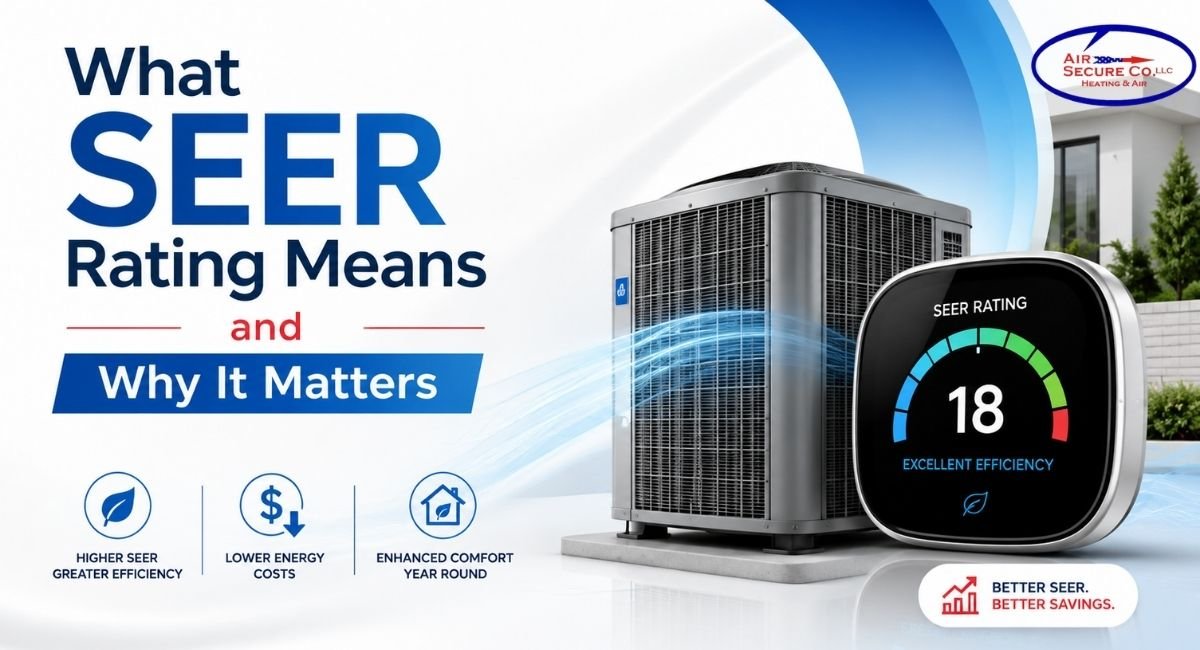
Air conditioning has moved far beyond just pushing cold air into a room. Today, most systems are judged by how efficiently they manage energy while keeping indoor temperatures stable through long cooling seasons. One of the most talked about indicators in that decision is the SEER rating explained in product labels, manuals, and installation recommendations.
For homeowners comparing systems, SEER often appears as a number without context. SEER 14, SEER 16, SEER 20, and higher ratings are commonly listed, yet the meaning behind these numbers is not always clear. This leads to confusion when choosing between systems that seem similar in cooling power but differ significantly in price.
SEER, or Seasonal Energy Efficiency Ratio, is more than a technical label. It directly connects to how much electricity your air conditioner consumes over time, how stable your indoor comfort feels, and how much you end up spending across years of use. When viewed properly, it becomes a long-term planning tool rather than just a specification.
Before getting into the details, it makes sense to tie SEER to real HVAC decisions people actually face, like replacing an old system, upgrading to a more efficient unit, or keeping things running smoothly with regular servicing. Things like routine HVAC maintenance tune-ups, improving efficiency through regular AC upkeep that helps lower energy bills, and following a seasonal HVAC maintenance checklist all directly influence how well a system performs in everyday use and how closely it matches its SEER rating in real conditions.
Understanding SEER Rating in Simple Terms
SEER stands for Seasonal Energy Efficiency Ratio. It is a measurement that compares how much cooling an air conditioning system produces versus how much electricity it consumes during an entire cooling season.
In practical terms, SEER rating explained in simple language means this:
Higher SEER = more cooling with less electricity
Lower SEER = more electricity required for the same cooling output
The concept is similar to fuel efficiency in vehicles. A car that travels farther on less fuel is more efficient. Likewise, an air conditioner that cools more space using less energy has a higher SEER rating.
The formula used is:
Cooling output over a season ÷ Total electrical energy consumed
This calculation is based on laboratory conditions that simulate seasonal changes. These include temperature fluctuations, humidity variation, and different load conditions when the system is working lightly or heavily.
However, real-world performance does not always match lab testing. Installation quality, insulation levels, duct design, and maintenance habits can all shift actual efficiency.
How SEER Ratings Are Measured in Real Testing Conditions
To give SEER values consistency, manufacturers test systems in controlled environments. These tests are designed to simulate a full cooling season rather than a single moment of operation.
Testing includes:
- Hot and mild temperature cycles
- Partial and full system load operation
- Standardized airflow conditions
- Controlled humidity variations
The final SEER number is calculated by dividing total cooling output by total electricity used during testing.
Even though this process is standardized, it does not fully reflect how homes operate in real life. For example, a poorly maintained system may lose efficiency over time due to clogged filters or restricted airflow.
This is why professional servicing such as air conditioning service in Cary NC becomes important for maintaining system performance close to its rated SEER value.
SEER Rating Ranges and What They Actually Mean
Not all SEER ratings represent the same level of performance. They fall into broad efficiency categories that help compare systems more easily.
| SEER Range | Efficiency Level | Energy Usage Pattern | Typical Use Case |
| 13–14 | Basic efficiency | Higher electricity consumption | Light usage or budget-focused systems |
| 15–17 | Balanced efficiency | Moderate electricity use | Most residential homes |
| 18–21 | High efficiency | Lower energy consumption | Frequent cooling demand |
| 22+ | Premium efficiency | Lowest operating cost | Advanced systems with long-term savings focus |
This table shows that SEER is not just a technical detail but a financial indicator over time.
Higher SEER systems generally cost more upfront. However, they often reduce electricity usage significantly during peak summer months when cooling systems run for long hours.
Why SEER Rating Matters More Than Most People Think
When people compare air conditioners, they often focus on price, brand, or cooling capacity. SEER rating is sometimes treated as secondary. However, it directly influences long-term operating cost.
Here is what SEER impacts in real usage:
- Monthly electricity bills during peak seasons
- Cooling consistency across different rooms
- System workload and wear over time
- Environmental energy consumption
- Total cost of ownership over 10 to 15 years
Even a small difference in SEER can create noticeable savings when multiplied across years of use.
For example, upgrading from a SEER 14 system to a SEER 18 system may reduce electricity usage significantly during long cooling cycles. That difference becomes more visible in homes where air conditioners run for extended hours daily.
SEER Rating Explained Through Energy Bills and Real Costs
One of the most practical ways to understand SEER rating explained is through electricity bills.
Higher SEER systems use advanced compressors and variable-speed technology to adjust cooling output based on demand. Instead of running at full power all the time, they regulate energy usage more efficiently.
Lower SEER systems operate in more basic cycles. They turn on, cool the space, then shut off repeatedly, which often leads to higher energy consumption.
Over time, this creates a difference in total cost that looks like this:
- Lower SEER: Lower purchase cost, higher monthly bills
- Mid SEER: Balanced upfront cost and energy savings
- High SEER: Higher initial investment, lower long-term bills
Many homeowners realize later that electricity cost over several years can exceed the original price difference between systems.
This is why system selection is often paired with professional evaluation from services like HVAC services that assess both equipment choice and long-term efficiency expectations.
SEER vs Real-World Performance Factors
SEER rating is useful, but it does not guarantee exact performance in every home. Several factors influence how efficiently a system actually runs.
Key real-world factors include:
- Home insulation quality
- Duct leakage or poor airflow design
- Installation accuracy
- Climate variation and seasonal humidity
- Maintenance frequency and filter condition
A high SEER system installed poorly can perform worse than a lower SEER system installed correctly.
This is why system installation and maintenance carry equal weight. Even high-efficiency equipment needs proper care to maintain performance levels.
Routine system care such as a professional HVAC tune-up helps keep airflow balanced, refrigerant levels in check, and overall system calibration properly adjusted, so the equipment continues to perform close to its intended efficiency standards.
Common Misunderstandings About SEER Ratings
Many misconceptions surround SEER values, which can lead to poor buying decisions.
One common belief is that the highest SEER rating is always the best choice. In reality, this depends on usage patterns and climate conditions. A very high SEER system may not provide proportional savings in homes with limited cooling needs.
Another misunderstanding is that SEER alone determines comfort. While efficiency affects performance stability, comfort also depends on airflow design, humidity control, and system sizing.
Some also assume that expensive systems automatically have high SEER ratings. This is not always true. Some premium models focus on smart controls or features rather than maximum efficiency.
Choosing the Right SEER Rating for Long-Term Use
Selecting a SEER rating is not just about upfront cost. It requires balancing usage patterns, long-term plans, and environmental conditions.
A practical approach includes:
- Moderate usage homes: Mid SEER systems
- High usage homes with long cooling seasons: Higher SEER systems
- Budget-sensitive situations: Entry-level SEER systems with proper maintenance
It is also important to consider system lifespan. A well-maintained unit can last over a decade, meaning efficiency savings accumulate over time.
For homeowners planning replacements, system selection often connects with installation decisions, such as Chapel Hill AC installation cost considerations and equipment selection through heating and cooling products.
SEER Rating and Maintenance Connection Most People Overlook
One of the most overlooked aspects of SEER performance is maintenance. Even a high SEER system loses efficiency if it is not serviced regularly.
Dust buildup, clogged filters, refrigerant imbalance, and duct restrictions can reduce system efficiency significantly.
This is why seasonal preparation matters. A structured routine like the seasonal HVAC maintenance checklist helps maintain system output closer to its original SEER rating.
Neglecting maintenance does not just reduce comfort. It also increases long-term operating costs.
Real-World Example of SEER Impact Over Time
To understand long-term effects, consider two systems running under similar conditions:
- System A: SEER 14
- System B: SEER 18
Both cool the same home for the same duration. However, System B uses less electricity to deliver the same cooling output.
Over a few months, the difference may seem small. Over several years, the gap in electricity costs becomes more noticeable.
This is why SEER is not just a technical rating but a long-term financial planning factor.
Final Perspective on SEER Rating Explained
SEER rating is one of the most practical tools for evaluating air conditioning efficiency, but it works best when combined with real-world considerations like installation quality, maintenance habits, and system sizing.
A higher SEER rating indicates better energy efficiency, but the right choice depends on how the system will actually be used over time. Instead of focusing only on the number, it is more effective to evaluate long-term operating cost and reliability together.
When planning an upgrade, replacement, or efficiency improvement, getting the right professional input can make the process much smoother and more reliable. With proper guidance and regular system care, such as routine air conditioning servicing in Cary NC and ongoing HVAC tune-up maintenance, homeowners can better ensure their system performs as expected and the SEER rating translates into real, consistent efficiency over time.
Air Secure Inc continues to support homeowners with system selection, installation, and maintenance strategies that align efficiency ratings with real-world comfort and cost savings.