Heating and cooling systems in Chapel Hill homes operate under constant seasonal stress. Hot, humid summers and cool winters mean HVAC systems rarely get a break, and without consistent care, performance slowly declines. What starts as minor airflow imbalance or slightly higher utility bills can eventually turn into full system failure.
This guide brings together a practical, real-world HVAC maintenance checklist designed for homeowners who want long-term efficiency rather than reactive repairs. Throughout the year, you can also rely on professional support such as HVAC maintenance & tune-up solution when deeper inspection is needed.
Why HVAC Maintenance Matters in Chapel Hill Homes
Chapel Hill’s climate places unique pressure on HVAC systems. High humidity encourages moisture buildup in coils and ductwork during summer, while winter heating cycles put strain on furnaces and heat pumps.
When maintenance is neglected, the issues usually don’t appear suddenly. Instead, they build over time—airflow weakens, energy bills rise, and systems begin cycling more frequently than normal. These patterns often signal early inefficiencies rather than immediate breakdowns.
Understanding system behavior early can also help homeowners decide between repair and replacement. A helpful breakdown of this decision is available through AC installation vs repair decision guide.
Year-Round HVAC Maintenance Overview
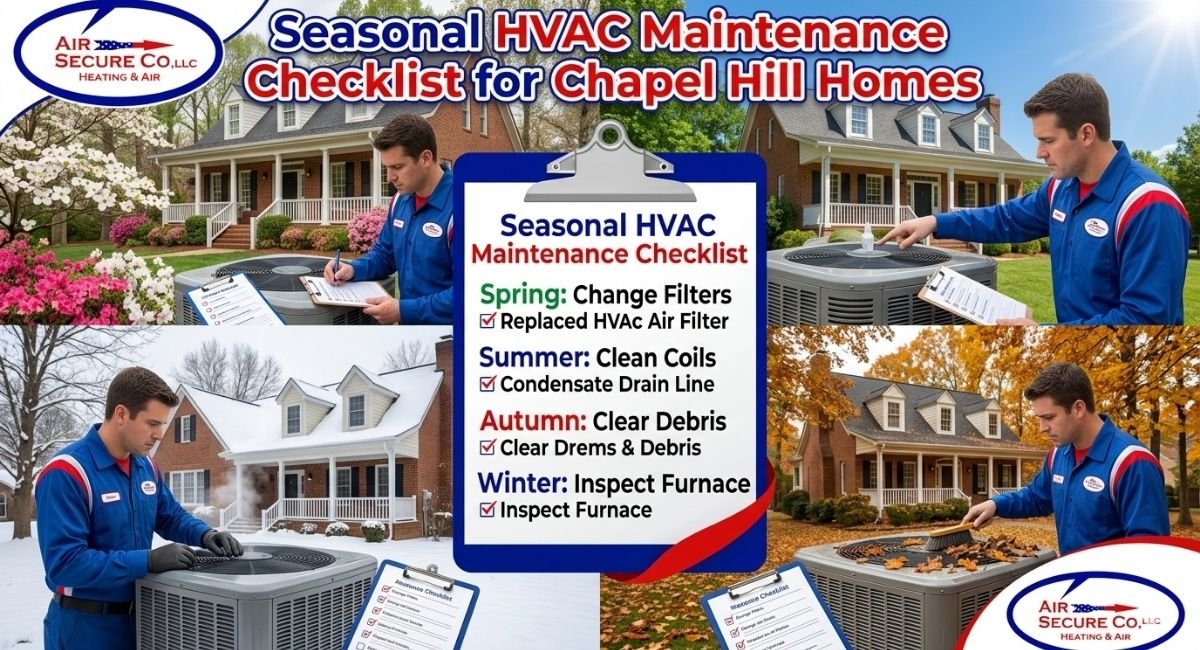
Instead of treating HVAC care as a once-a-year task, it is better to think in seasonal cycles. Each season places different demands on your system, which is why maintenance should follow a structured pattern.
| Season | Focus Area | Key Actions |
| Spring | Cooling preparation | Coil cleaning, refrigerant inspection, airflow testing |
| Summer | Peak cooling efficiency | Filter maintenance, thermostat optimization, drain line check |
| Fall | Heating system readiness | Furnace inspection, ignition testing, safety checks |
| Winter | System stability | Airflow balance, insulation check, safety monitoring |
Even with this structure, a few core tasks remain consistent throughout the year. Air filters should be replaced regularly, outdoor units must stay clear of debris, and thermostat settings should be checked for accuracy.
Spring HVAC Maintenance: Preparing for Cooling Demand
Spring is the transition season where heating systems wind down and cooling systems prepare for heavy use. It is also one of the best times to schedule preventive servicing before peak summer demand begins.
At this stage, cleaning the coils becomes especially important because dust, pollen, and winter residue can reduce heat-transfer efficiency. Refrigerant levels should also be inspected to ensure the system can handle rising temperatures effectively.
If early cooling issues appear, such as inconsistent temperature control or weak airflow, it may be worth reviewing common causes in this guide to air conditioner problems explained.
Summer HVAC Maintenance: Managing Peak System Load
Summer is when HVAC systems operate under maximum stress. Long operating hours mean even small inefficiencies become noticeable quickly, especially during heat waves.
This is the season where filter maintenance becomes critical. Filters may need more frequent replacement depending on usage and indoor air quality conditions. Thermostat behavior should also be monitored closely, since extreme temperature settings often force the system to overwork.
A common issue during this period is warm air blowing from vents instead of cold air. This can result from refrigerant imbalance or compressor strain, which is explained in detail in why AC blows warm air troubleshooting guide.
In extreme cases where the system fails during peak heat, emergency assistance may be necessary, which is available through 24-hour HVAC emergency service.
Fall HVAC Maintenance: Preparing for Heating Season
Fall is often overlooked, but it plays one of the most important roles in system reliability. Before winter arrives, heating systems should be inspected thoroughly to avoid mid-season failures.
This includes checking furnace components, testing ignition systems, and ensuring the heat exchanger is free from cracks or corrosion. Dust buildup inside burners is also common after months of inactivity, and it can reduce combustion efficiency.
Professional inspection during this season is especially valuable, and services such as furnace repair and inspection services help ensure safe and efficient heating performance.
Fall is also a good time for homeowners to evaluate long-term system efficiency and plan for future upgrades if needed.
Winter HVAC Maintenance: Safety and Stability Focus
Winter maintenance is less about performance tuning and more about reliability and safety. Heating systems often run continuously during cold nights, which makes airflow consistency and system stability essential.
Duct insulation becomes particularly important in unheated areas, and vents should remain unobstructed to allow proper circulation. Carbon monoxide detectors should also be checked regularly for safety assurance.
During winter, indoor air tends to become dry due to continuous heating cycles, which can impact comfort and respiratory health. This is where indoor air quality solutions become relevant, such as indoor air quality improvement services.
HVAC Filter Maintenance and Air Quality Connection
One of the simplest yet most impactful aspects of HVAC care is filter maintenance. Filters directly influence airflow, energy efficiency, and indoor air quality.
A good practice is to replace standard filters every one to three months, depending on usage and environmental conditions. Homes with pets or allergy concerns may require more frequent changes.
Neglecting filters forces the system to work harder, which increases wear on internal components and reduces efficiency over time. Clean filters, combined with proper duct maintenance, significantly improve overall system performance.
Preventive HVAC Maintenance and Long-Term Benefits
Preventive maintenance is what separates a system that lasts a decade from one that fails prematurely. Instead of waiting for breakdowns, regular inspections help identify small issues before they become expensive repairs.
Some of the long-term benefits include lower energy consumption, fewer emergency repairs, and more consistent indoor temperatures throughout the year. Over time, this approach also extends the lifespan of major HVAC components like compressors and blower motors.
For homeowners considering efficiency upgrades, modern equipment options are available through heating and cooling system options.
Common HVAC Maintenance Mistakes Homeowners Make
Many HVAC problems are not caused by system failure but by simple maintenance oversights. One of the most common mistakes is delaying filter replacement until airflow becomes noticeably weak.
Another frequent issue is ignoring outdoor unit cleaning, which allows debris buildup to restrict performance. Improper thermostat settings, such as extreme cooling in summer or excessive heating in winter, also place unnecessary strain on the system.
These small habits, when repeated over time, significantly reduce efficiency and increase repair frequency.
When Professional HVAC Support Becomes Necessary
While basic maintenance can be handled by homeowners, certain situations require professional expertise. If airflow drops suddenly, unusual noises appear, or energy bills increase without explanation, it is usually a sign of deeper system issues.
In such cases, scheduling a professional inspection is the safest option. A structured service visit through HVAC tune-up and maintenance service helps identify electrical issues, refrigerant imbalances, and mechanical wear before they lead to system failure.
Local HVAC Support in Chapel Hill
Local climate conditions make professional regional expertise especially important. Chapel Hill homes experience a mix of humidity, seasonal temperature swings, and long cooling cycles that require tailored maintenance approaches.
Homeowners in the area can explore localized support through Chapel Hill HVAC services, along with broader service coverage listed at regional HVAC service areas.
External Reference for Indoor Air Quality Standards
For additional technical guidance on indoor air quality and HVAC efficiency standards, a trusted resource is the U.S. Environmental Protection Agency:
EPA Indoor Air Quality Guide
Final Thoughts
A structured HVAC maintenance routine is not just about preventing breakdowns, it is about maintaining comfort, efficiency, and long-term system reliability. When seasonal care becomes a habit rather than a reaction, HVAC systems perform more efficiently, last longer, and require fewer emergency repairs.
With the right balance of homeowner maintenance and professional support, Chapel Hill residents can keep their indoor environments comfortable and energy-efficient throughout the entire year.