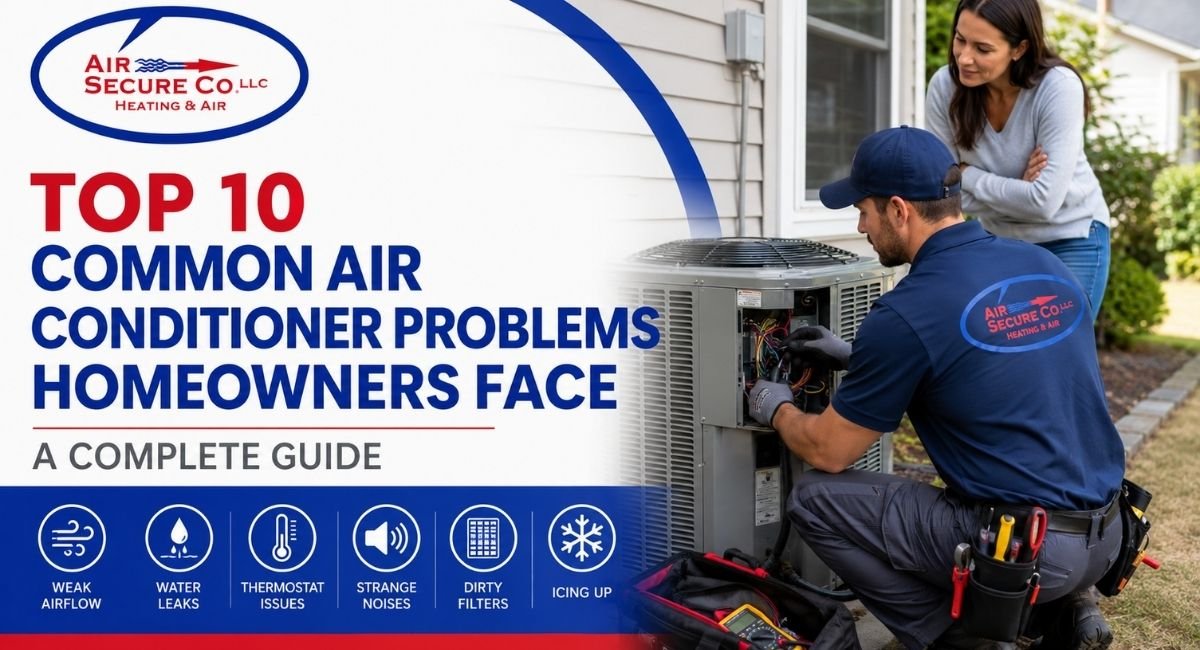
Air conditioners are expected to deliver steady cooling without interruption, especially during peak heat conditions. When performance drops, it usually starts with small warning signs like uneven airflow, mild temperature shifts, or unusual system behavior. These early indicators often point toward developing HVAC issues that many homeowners ignore until cooling failure becomes unavoidable.
Understanding these common air conditioner problems helps reduce repair costs, improve system efficiency, and avoid unexpected breakdowns during high demand periods.
This guide explains the most frequent AC troubleshooting problems, what causes them, and how to respond before they turn into expensive repairs.
Why Small Air Conditioner Issues Turn Into Bigger Problems
Most air conditioning systems do not fail suddenly. Instead, they decline gradually through small inefficiencies that build over time. The challenge is that these signs often feel minor in the beginning.
When HVAC system problems are ignored, they often lead to:
- Reduced cooling performance
- Higher electricity usage
- Compressor strain
- Refrigerant imbalance
- Complete cooling failure
Routine care through professional HVAC maintenance and tune-up services in NC helps identify early faults and keeps the system stable before serious damage develops.
1. Weak Cooling or Uneven Temperature
One of the most common HVAC issues homeowners experience is weak or uneven cooling. The system runs continuously, but comfort levels remain low.
This usually happens due to restricted airflow, clogged filters, or internal coil buildup. In some cases, low refrigerant levels or duct imbalance can also affect cooling distribution across rooms.
When different areas of the home feel warmer than others, it often signals airflow inconsistency rather than thermostat error.
2. Air Conditioner Blowing Warm Air
Warm air from vents is one of the most frustrating air conditioner issues because it indicates a direct cooling failure.
Common causes include low refrigerant levels, compressor malfunction, or incorrect thermostat mode. In heat pump systems, reversing valve issues can also trigger this problem.
When basic thermostat checks don’t resolve the problem, professional AC repair services in NC can help identify the issue and restore your system’s cooling performance. A thorough inspection and reliable air conditioning repair can ensure your unit is working efficiently.
3. Weak Airflow from Vents
Low airflow reduces cooling efficiency even when the system is technically working. Rooms take longer to cool, and temperature consistency becomes uneven.
This issue is often linked to dirty filters, blocked ductwork, or blower motor strain. In some homes, closed or obstructed vents can also worsen airflow problems.
Over time, restricted airflow increases system pressure and contributes to larger HVAC system problems.
4. Frequent On and Off Cycling
Short cycling occurs when the AC turns on and off repeatedly without completing a full cooling cycle. This is one of the most common AC troubleshooting problems.
It is often caused by oversized systems, thermostat placement near heat sources, or refrigerant imbalance. Electrical issues can also trigger irregular cycling patterns.
This behavior increases wear on the compressor and reduces overall system lifespan.
5. Refrigerant Leakage and Cooling Loss
Refrigerant is essential for heat transfer inside the system. When it leaks, cooling efficiency drops quickly and unevenly.
Signs include ice buildup on coils, longer cooling cycles, and reduced airflow from vents. In some cases, a faint hissing sound may also indicate a leak.
This issue requires professional repair because refrigerant handling must follow safety and environmental standards.
6. Unusual Noises from the System
Air conditioners are designed to operate quietly, so new or unusual sounds are always a warning sign.
Grinding noises often suggest motor wear, buzzing may indicate electrical issues, and banging sounds can point to loose internal components. Hissing is commonly linked to refrigerant leakage.
Ignoring these sounds can lead to serious HVAC system problems over time.
7. AC Not Starting or Power Failure
When the system does not turn on at all, the issue can range from simple electrical faults to internal component failure.
In some cases, tripped breakers or dead thermostat batteries are responsible. In others, capacitor failure or wiring issues may be the root cause.
Basic electrical checks should always be done before assuming major system damage.
8. Frozen Evaporator Coils
Frozen coils indicate restricted airflow or refrigerant imbalance. When this happens, the system cannot properly absorb heat, resulting in cooling failure.
Dirty filters, blocked return vents, or low refrigerant are common causes. If ignored, ice buildup spreads and eventually shuts down airflow completely.
The system should be turned off immediately when freezing is detected.
9. Thermostat Malfunctions and Incorrect Readings
Sometimes the air conditioning system is functioning correctly, but the thermostat is not.
Poor calibration, low battery levels, or poor placement near heat sources can cause incorrect temperature readings. Smart thermostats may also experience software glitches.
This issue often creates confusion, making it appear like a larger HVAC system problem than it actually is.
10. Water Leakage Around Indoor Unit
Water leakage usually indicates drainage or condensation issues within the system.
Blocked drain lines, cracked drain pans, or frozen coils melting can all cause water buildup around the indoor unit. If left untreated, this can lead to structural damage inside the home.
Common AC Problems Overview Table
| Problem | Early Signs | Risk Level | Typical Cause |
| Weak cooling | Uneven room temperatures | Medium | Dirty filter or airflow restriction |
| Warm air | No cooling output | High | Refrigerant or compressor issue |
| Short cycling | Frequent start/stop | High | Thermostat or system imbalance |
| Refrigerant leak | Ice on coils | High | Line damage or leakage |
| Water leakage | Moisture around unit | Medium | Drain blockage |
Preventive Maintenance That Reduces HVAC Issues
Most HVAC issues can be prevented through regular maintenance and system care. Simple habits like filter replacement, outdoor unit cleaning, and seasonal inspections help maintain efficiency.
Homeowners planning upgrades or system replacements can review AC installation cost insights in Chapel Hill NC to better understand system sizing, efficiency ratings, and long-term performance expectations before making decisions.
Professional servicing such as Heating system and furnace repair services in Cary, NC and nearby communities in North Carolina also helps maintain year-round comfort and system balance.
When Professional Help Becomes Necessary
While some AC troubleshooting problems can be handled with basic checks, many require technical expertise. Refrigerant work, compressor repair, and electrical diagnostics should always be handled by licensed HVAC professionals.
Timely service reduces long-term repair costs and prevents full system breakdown.
Homeowners can access full support through HVAC repair and installation services for maintenance, upgrades, and emergency assistance.
Knowing When Your AC Needs Professional Help
Air conditioning systems almost always show early warning signs before major failure occurs. Paying attention to airflow changes, temperature inconsistency, and unusual system behavior helps prevent cooling failure and reduces repair expenses.
Understanding these common air conditioner problems gives homeowners better control over comfort and system reliability. With proper maintenance and timely service, most HVAC system problems can be avoided entirely.
For dependable support, system upgrades, and professional HVAC solutions, Air Secure Inc provides complete service options tailored to residential and commercial needs.