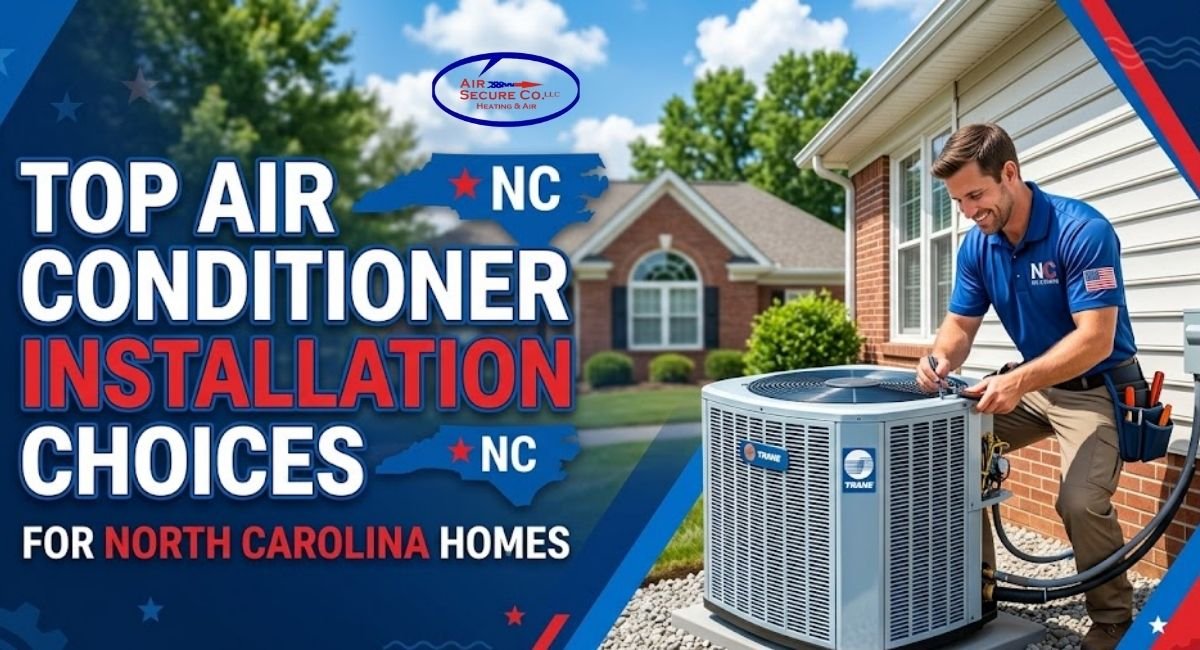
Choosing an air conditioning system for a home in North Carolina is rarely a simple one-size decision. The region brings long, humid summers, sudden temperature shifts, and varying home designs that all affect how well a cooling system performs. What works for a compact single-story home may not suit a larger multi-level property with aging ductwork or uneven airflow.
This air conditioner installation Chapel Hill NC Guide focuses on real installation options, what affects performance, and how homeowners can avoid common mistakes when selecting a system. It also explains how installation quality and system design matter just as much as the equipment itself.
Before deciding on a system, many homeowners review pricing structures and installation variables through resources like AC installation cost breakdown in Chapel Hill to understand what drives overall investment beyond just unit pricing.
How North Carolina Homes Influence AC Installation Choices
Every home has its own cooling behavior. North Carolina properties especially vary due to differences in insulation quality, construction age, and exposure to heat and humidity.
Older homes often come with limited or inefficient ductwork, while newer builds are designed with energy flow in mind. This difference alone can shift the entire installation approach. Homes with poor insulation or sun-facing rooms may also require stronger or zoned systems to maintain consistent indoor comfort.
In many cases, homeowners also consider long-term servicing early in the decision stage, especially by reviewing HVAC maintenance and tune-up services to understand how system upkeep affects performance over time.
Main Air Conditioner Installation Options for North Carolina Homes
Air conditioning systems today are not limited to just one standard model. Installation choices depend heavily on structure, comfort expectations, and budget planning.
Central Air Conditioning Systems
Central AC remains one of the most widely used systems across suburban homes. It operates through ductwork that distributes cooled air throughout the entire house from a central unit.
This system works well when ducts are properly sealed and balanced. Many homeowners prefer it because it delivers consistent cooling across multiple rooms without the need for separate units. However, if ductwork is outdated or leaking, efficiency can drop significantly.
For full system planning and installation support, homeowners often review options listed under professional HVAC services to match system design with home structure.
Ductless Mini-Split Systems
Ductless systems offer a different approach. Instead of relying on ducts, they use individual indoor units connected to an outdoor compressor. Each unit controls a specific room or zone.
This option is particularly useful in older homes or additions where installing ductwork is impractical. It also gives homeowners more control over room-by-room temperatures, which can help reduce unnecessary energy use in unused spaces.
Heat Pump Systems
Heat pumps are becoming increasingly popular due to their dual functionality. They provide both heating and cooling using the same system, which makes them suitable for North Carolina’s seasonal climate.
They are especially efficient in moderate weather conditions and can reduce reliance on separate heating equipment. However, performance can vary during extreme temperature periods, which may require supplemental support in some homes.
Packaged HVAC Systems
Packaged systems combine heating and cooling components into a single outdoor unit. These are typically installed in homes where indoor space is limited or where simplified mechanical design is preferred.
They are less common in residential neighborhoods but remain practical for compact layouts or specific construction designs where indoor equipment placement is restricted.
What Affects Installation Cost in Real Homes
The cost of installing an air conditioner is shaped by more than just the system itself. Home layout, duct condition, and installation complexity all play a role in final pricing.
Key Cost Factors
| Factor | Impact on Installation |
| Home size | Determines system capacity needed |
| Ductwork condition | Repairs or replacement increase cost |
| System type | Central, ductless, and heat pumps vary widely |
| Labor complexity | Multi-floor homes require more installation time |
| Efficiency rating | Higher efficiency units cost more initially |
| Electrical upgrades | Older homes may need system compatibility updates |
Understanding these factors helps homeowners avoid unexpected expenses during installation planning. A deeper local breakdown is available through Chapel Hill AC installation cost insights, which explains regional pricing variations.
Choosing the Right System Based on Home Layout
The structure of a home plays a major role in determining which system performs best over time.
Single-story homes often benefit from central air systems because airflow distribution is simpler and more balanced. Multi-story homes, on the other hand, may experience uneven temperatures, making zoned systems or ductless units more effective.
Older homes usually lean toward ductless solutions to avoid costly duct installation, while newer homes are often designed to support central systems from the beginning.
Installation Quality and Why It Changes Everything
Even a high-quality AC system can underperform if installation is not handled correctly. Most long-term issues come from poor setup rather than equipment failure.
Incorrect installation can lead to uneven cooling, frequent breakdowns, higher energy consumption, and reduced system lifespan. Proper system sizing, duct sealing, and airflow calibration are essential for long-term reliability.
In homes where air quality is also a concern, pairing cooling systems with indoor air quality solutions can significantly improve comfort and overall indoor environment.
Energy Efficiency and Long-Term Cost Thinking
While upfront installation cost is important, long-term energy usage often has a greater financial impact. North Carolina summers can place heavy demand on cooling systems, making efficiency a key factor.
Modern systems are designed with improved airflow control, variable speed compressors, and smart thermostat integration. These features help reduce unnecessary energy use while maintaining consistent comfort levels.
System Efficiency Comparison
| System Type | Efficiency Level | Best Fit |
| Central AC | Moderate to High | Whole-home cooling |
| Ductless Mini-Split | High | Zoned cooling needs |
| Heat Pump | High | Year-round use |
| Packaged System | Moderate | Compact installations |
Maintenance After Installation
Once a system is installed, performance depends heavily on ongoing care. Without regular maintenance, even the best systems lose efficiency over time.
Basic upkeep includes filter changes, coil cleaning, refrigerant checks, and airflow inspection. Many homeowners schedule seasonal servicing through HVAC maintenance programs to prevent performance drops during peak summer months.
Routine servicing also reduces emergency repair costs and helps extend system lifespan.
When Replacement Makes More Sense Than Repair
There are situations where installing a new system becomes more practical than repairing an old one. If a system is over 12 to 15 years old, requires frequent repairs, or no longer cools evenly, replacement is often the better financial decision.
Rising energy bills and outdated refrigerant systems are also strong indicators that a new installation may be needed.
Local Climate Considerations in North Carolina
North Carolina’s climate places consistent pressure on cooling systems due to humidity and long warm seasons. Homes must be prepared not only for heat but also for moisture control.
This is why proper system sizing and humidity handling matter as much as cooling power. Local service areas like Chapel Hill HVAC support help align system design with regional weather conditions and housing styles.
Final Thoughts
Air conditioning installation is not just about choosing equipment. It is about matching the right system with the home’s structure, airflow design, and long-term energy needs.
A well-planned installation improves comfort, reduces long-term costs, and supports healthier indoor air conditions. Whether selecting central air, ductless systems, or heat pumps, the focus should remain on correct sizing, professional installation, and future maintenance planning.
Homeowners can explore full-service support and system options through Air Secure Inc HVAC solutions to ensure installation decisions are aligned with long-term home comfort and efficiency goals.