Table of Contents
- What Freezes in Your HVAC System and Why It Happens
- Dirty Air Filter and AC Freezing: The Most Common Culprit
- Blocked Vents, Closed Dampers, and Restricted Airflow
- Low Refrigerant Symptoms and Refrigerant Leaks
- Dirty Evaporator Coils and Reduced Heat Transfer
- How to Thaw Frozen AC Coils Safely
- Step 1: Turn Off Your System Immediately
- Step 2: Allow Time for the Coils to Thaw
- Step 3: Prepare for Water Drainage and Protect Your Home
- Step 4: Check and Clear Airflow Restrictions
- Step 5: Replace Your Air Filter Before Restarting
- Step 6: Inspect for Water Damage and Drainage Issues
- Warning Signs That Continued Operation Will Cause Damage
- When to Stop Troubleshooting and Call a Professional
- Prevention: Keep Your HVAC from Freezing Again
- Frequently Asked Questions
Last Updated: October 11, 2026
What Freezes in Your HVAC System and Why It Happens
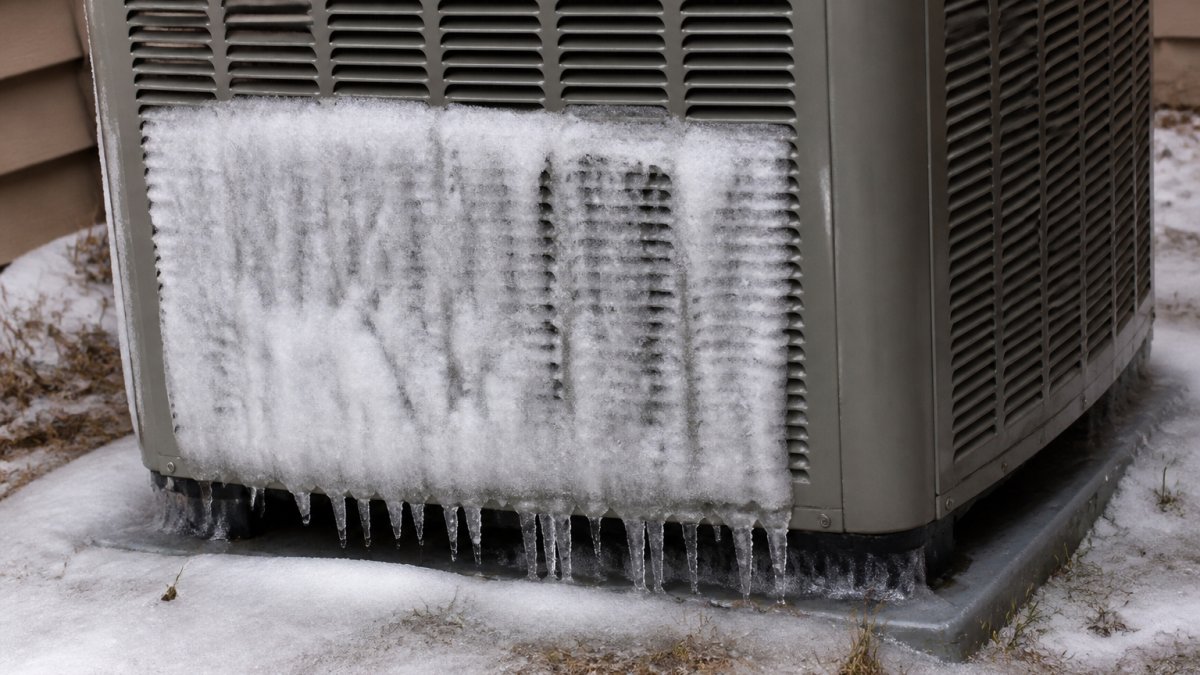
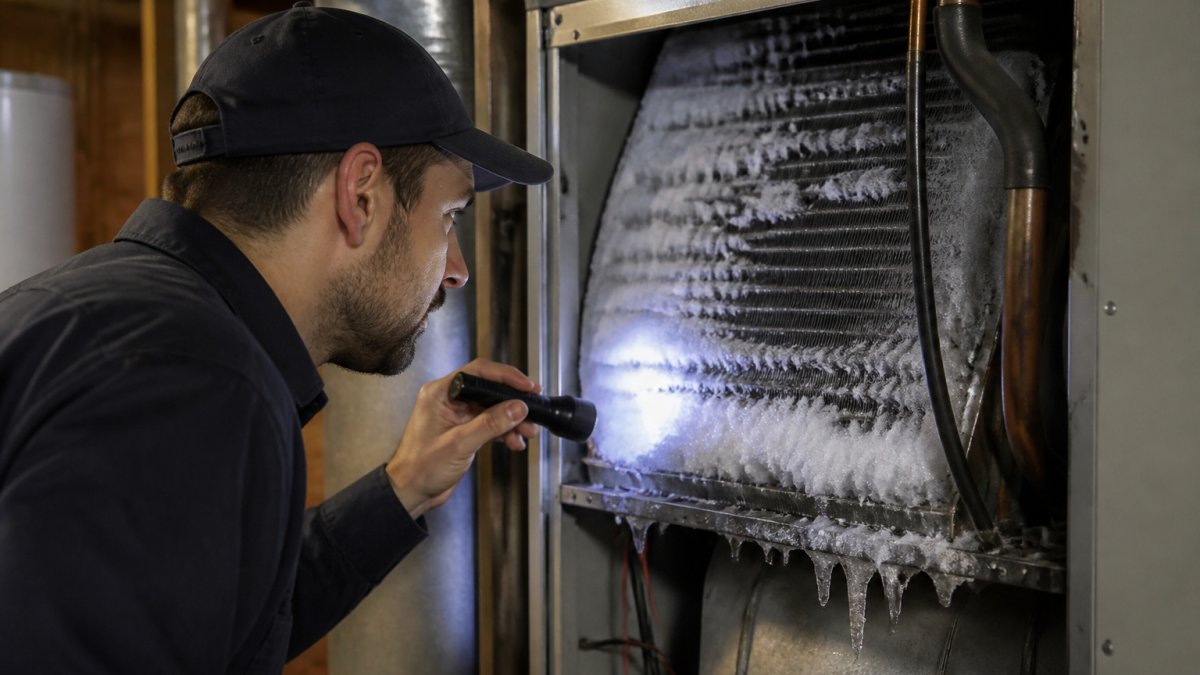
When your air conditioner stops cooling, the problem centers on your evaporator coil and refrigerant lines inside your indoor air handler. When airflow drops or refrigerant levels fall too low, the coil temperature plummets below freezing and ice forms on the coil fins.
A frozen evaporator coil prevents heat transfer, causing your AC to blow warm air or stop blowing altogether. Left unchecked, continued operation can damage the compressor, the most expensive part of your system. Most HVAC freeze problems have straightforward causes you can troubleshoot safely.
Dirty Air Filter and AC Freezing: The Most Common Culprit
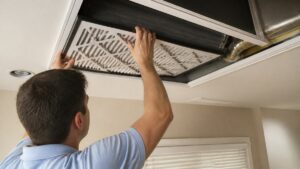
A clogged air filter is the single most common reason your HVAC freezes. When dust and debris block the filter, airflow drops and the coil temperature falls below 32°F. Check your filter monthly during cooling season. A standard 1-inch filter typically lasts 30 days, but homes with pets or allergies may need changes every 2-3 weeks.
Replacing your air filter takes five minutes: turn off your system, locate your filter (usually in a return air duct or blower compartment), note the size, slide out the old filter, insert a new filter with the arrow pointing toward the furnace, and turn the system back on.
If you replace the filter and your AC still freezes within a few days, the problem isn’t just airflow. Move on to checking other restrictions.
Replace your air filter before peak cooling season begins. A clean filter from day one prevents most freeze-ups and keeps your system running efficiently all summer.
Blocked Vents, Closed Dampers, and Restricted Airflow
Beyond a dirty filter, blocked vents, closed dampers, and debris in ducts all reduce airflow and trigger freezing. Walk through your home and check every supply vent for blockages. Inspect visible ductwork for crushed sections or loose connections, and verify dampers are fully open.
If your vents are clear and dampers are open, but freezing persists, the issue likely involves refrigerant or coil condition.
Low Refrigerant Symptoms and Refrigerant Leaks
Low refrigerant charge causes the coil to freeze because it can’t absorb enough heat. A refrigerant leak is the most common cause. Before assuming a refrigerant problem, distinguish it from airflow problems, they require different fixes and have different warning signs.
How to Tell Airflow Problems Apart from Refrigerant Problems
Both airflow restriction and low refrigerant cause freezing, but they leave different clues:
Airflow problems: Ice forms only on the coil (not refrigerant lines), freezing occurs quickly after neglecting filter changes, system blows little air, and problem resolves within 24 hours of replacing the filter and clearing vents.
Refrigerant problems: Ice spreads to refrigerant lines, freezing returns within days or weeks despite filter replacement, system blows normal volume but air is warm, and you hear hissing or see oily residue on copper lines.
Refrigerant Leak Symptoms
Signs of a refrigerant leak include: AC runs but doesn’t cool well despite strong airflow, hissing or bubbling sounds near the indoor or outdoor unit, ice that returns after thawing, warm air from vents, higher electric bills, and visible oil stains on copper lines.
Why Refrigerant Diagnosis and Repair Requires a Professional
A refrigerant leak requires professional diagnosis and repair using specialized equipment to locate the leak and measure charge level. Sealing the leak and recharging demands EPA certification. Handling refrigerant is regulated under Section 608 of the Clean Air Act, only certified technicians can legally purchase, handle, and dispose of it.
Never ignore a refrigerant leak. Continued operation with low refrigerant can damage your compressor, turning a $300-500 repair into a $2,000+ replacement. If you suspect a leak based on the clues above, stop running your AC and call a professional immediately.
What Happens During a Professional Refrigerant Diagnosis
A technician will measure current refrigerant charge, scan for leaks using an electronic detector, identify the leak location, repair it, evacuate and recharge the system, and verify the repair. Catching a leak early saves thousands in compressor replacement costs.
Dirty Evaporator Coils and Reduced Heat Transfer
Dust and debris on evaporator coil fins prevent heat absorption, causing the coil temperature to drop and ice to form. Signs include reduced cooling despite a new filter, musty smells, water pooling, and visible dust on the coil. Professional coil cleaning uses specialized brushes and solution to restore the fins; improper cleaning can damage them.
How to Thaw Frozen AC Coils Safely
If your AC is frozen, do not run it continuously, this can damage the compressor. Follow these steps instead:
Step 1: Turn Off Your System Immediately
Switch your thermostat to OFF to halt refrigerant circulation and prevent further ice accumulation. If you have a heat pump, do not switch to heating mode yet, this can cause outdoor-unit icing or compressor damage. Wait until the indoor coil has thawed completely.
Step 2: Allow Time for the Coils to Thaw
Plan for 24 hours minimum thawing. You can speed this by switching to fan-only mode (if available), which circulates air over the frozen coil without running the compressor. For heat pump systems above 60°F: after 2-3 hours of fan-only operation, you may switch to heating mode to reverse refrigerant flow. Do not use hair dryers, heat guns, or hot water on the coil, and do not chip or scrape ice away manually.
Step 3: Prepare for Water Drainage and Protect Your Home
As the coil thaws, water drains from your system. Locate your condensate drain line and verify it’s clear and not kinked. Place towels or a pan under the air handler to catch overflow. If your air handler is in an attic or upper floor, position a bucket below the drain outlet. Check every few hours during the first 12 hours for water pooling.
Step 4: Check and Clear Airflow Restrictions
While the coil thaws, replace your air filter if dirty, open all supply vents and interior doors, and check ductwork for blockages. Ensure your outdoor condenser is clear of debris. For heat pumps: do not remove frost or ice from the outdoor unit, heat pumps defrost automatically.
Step 5: Replace Your Air Filter Before Restarting
Install a new air filter before restarting. Use the correct size and MERV rating (check your old filter frame for dimensions). Most residential systems use MERV 8-11 filters; higher ratings restrict airflow and can cause freezing.
Step 6: Inspect for Water Damage and Drainage Issues
Before restarting, check for water pooling, verify the condensate drain line is clear and slopes downward, and inspect for mold growth or musty odors. If you find standing water, a clogged drain, or mold, do not restart, call a professional.
After thawing and inspection, your system should cool normally if the cause was just a dirty filter and restricted airflow. If freezing returns within a week, a deeper problem like low refrigerant or a dirty coil is at play, and you’ll need professional diagnosis.
Warning Signs That Continued Operation Will Cause Damage
If you notice any of these during or after thawing, stop running your system immediately and call a technician:
- Repeated freezing within days: Indicates a refrigerant leak or severely dirty coil. Continued operation will damage the compressor.
- Weak or no airflow even with a clean filter: Suggests a blockage deep in the ductwork or a failing blower motor. Running the system can worsen motor damage.
- Unusual noises (grinding, squealing, or rattling): May indicate compressor damage from previous ice buildup or a loose component. Operating further risks catastrophic failure.
- Water leaking inside your home: Signals a drainage problem or cracked coil. Continued operation can cause water damage to insulation, drywall, or electrical components.
- Burning smell or visible smoke: Indicates electrical or motor damage. Turn off immediately and do not restart.
- Outdoor unit not running or making loud noises: Suggests compressor or fan motor failure. Do not attempt to restart.
When to Stop Troubleshooting and Call a Professional
Stop DIY troubleshooting if any of these apply:
- You suspect a refrigerant leak (hissing sounds, visible oil stains, ice on refrigerant lines)
- Freezing returns within a few days after you’ve replaced the filter and cleared vents
- Your AC runs but produces almost no airflow even with a clean filter
- You see water pooling inside your home or mold growth around the air handler
- The outdoor condenser isn’t running or is making unusual noises
- Your system is over 10 years old and freezes repeatedly
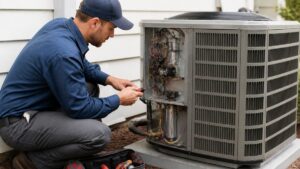
At Air Secure Inc, we handle these complex problems regularly. Our licensed technicians can diagnose refrigerant issues, clean coils professionally, and repair leaks quickly. We offer 24-hour emergency heating services throughout Wake County.
A professional inspection typically identifies the root cause within the first visit. Technicians use specialized tools to measure refrigerant charge, check airflow, and inspect coil condition. This saves you time and prevents guesswork that might delay your repair.
Prevention: Keep Your HVAC from Freezing Again
Once your system is running again, simple maintenance prevents future freeze-ups.
Replace your air filter every 30 days during cooling season. Mark it on your calendar or set a phone reminder. This single step prevents the majority of freeze problems.
Keep supply vents and return air grilles clear. Don’t block them with furniture or close doors that restrict airflow throughout your home.
Have your evaporator coil professionally cleaned every 2-3 years, especially if you have pets or live in a dusty area. Clean coils transfer heat efficiently and resist freezing.
Schedule annual maintenance before cooling season starts. A technician will inspect your refrigerant charge, check airflow, and clean or replace your filter. Catching small problems early prevents expensive failures later.
Run your system regularly, even in mild weather. Continuous operation keeps refrigerant circulating and prevents coil icing. If you’re away for extended periods, set your thermostat to a higher temperature rather than turning off cooling entirely.
| Problem | Prevention Step | Benefit |
|---|---|---|
| Dirty air filter | Replace monthly | Maintains airflow, prevents ice buildup |
| Blocked vents | Clear furniture and debris | Ensures consistent air circulation |
| Refrigerant leak | Annual maintenance check | Catches low charge before freezing occurs |
| Dirty coil | Professional cleaning every 2-3 years | Restores heat transfer efficiency |
| System neglect | Schedule spring maintenance | Prevents emergency failures during peak cooling |
A frozen HVAC system disrupts your comfort and risks expensive damage. Most freeze-ups stem from simple problems like a dirty filter or blocked vents, issues you can address quickly. When freezing persists after basic troubleshooting, professional diagnosis is your best move. At Air Secure Inc, we’ve served Wake County since 2004 with fast, reliable repairs and maintenance that keeps your system running year-round. We’re BBB A+ accredited, licensed, and insured, and we offer 24-hour emergency heating services when you need us most. Get a quote today and let our team restore your cooling comfort.
Frequently Asked Questions
Can a dirty air filter cause an AC to freeze?
Yes. A dirty or plugged air filter restricts airflow to the evaporator coil, causing it to drop below freezing temperature. When warm air cannot reach the coil, condensation freezes on the coil surface. Replacing your air filter every 1-3 months prevents this common cause of HVAC freeze-ups and keeps your system running efficiently.
How long does it take for frozen AC coils to thaw?
Frozen coils typically thaw within 24 hours after you turn off your system. The exact time depends on indoor temperature and humidity. Never force thawing with heat or try to remove ice manually, as this can damage the coil. Once thawed, identify and fix the underlying cause (dirty filter, blocked vents, or low refrigerant) before restarting your HVAC.
What are the signs of low refrigerant in my HVAC system?
Low refrigerant symptoms include frozen evaporator coils, weak or warm air from vents, hissing sounds near the outdoor unit, and repeat freeze-ups even after clearing airflow. If you suspect low refrigerant, turn off your system and call a licensed technician immediately. Refrigerant leaks require professional repair and recharging, this is not a DIY fix.
Is it bad to run my AC when it’s frozen?
Yes, running your AC with frozen coils can damage the compressor and reduce cooling system efficiency. Continued operation forces refrigerant liquid into the compressor, which can cause mechanical failure and expensive repairs. If your coils freeze, turn off your system right away and troubleshoot the cause before restarting.