Table of Contents
- Do Air Filters Help Allergies? What the Evidence Shows
- How Air Filters Capture Pollen, Dust, and Pet Dander
- Air Purifier vs HVAC Filter for Allergies: Which One Wins?
- MERV Rating for Allergies: What Number Should You Choose?
- The Best Air Filter for Allergies: Selection Criteria That Matter
- How Often to Change Your Air Filter for Allergies
- Setting Realistic Expectations and Avoiding Common Mistakes
- Frequently Asked Questions
Last Updated: October 12, 2026
Do Air Filters Help Allergies? What the Evidence Shows
Do air filters help allergies? Yes, but with real limits. A good filter traps a share of the pollen, dust, and pet dander floating through your home. It does not clear every allergen, and it will not replace medication.
The Asthma and Allergy Foundation of America notes that indoor allergens like dust mites and pet dander are common triggers, and that lowering exposure helps reduce symptoms. This guide explains what filtration can do, which filters work best, and how to set realistic expectations.
What Filtration Can and Cannot Do for Allergy Symptoms
Air filtration is the process of pulling air through a filter media that traps airborne particles before they recirculate into your living space.
It can help with:
- Pollen that drifts in through open windows
- Pet dander and pet hair
- Some dust and dust mites
- Smoke and general irritants
It cannot:
- Remove allergens settled deep in carpet or bedding
- Fix a damp home where mold grows
- Replace allergy medication or shots
If you sneeze indoors all year, filtration is one tool, not the whole fix.
How Air Filters Capture Pollen, Dust, and Pet Dander
Filters work by forcing air through a mesh that catches particles by size. Pollen grains are large and easy to trap. Pet dander and dust are smaller, so they need a tighter filter.
A pre-filter catches big debris like hair and lint. The main filter then traps finer particles. An electrostatic filter uses a static charge to grab small bits, while a HEPA filter traps the smallest particles of all.
Particle Capture, Airflow, and Filter Efficiency
Filter efficiency is the share of particles a filter removes from the air passing through it. Higher efficiency means cleaner air, but it also means more resistance.
That resistance slows airflow. A clogged or overly tight filter makes your HVAC system work harder, which can raise energy bills and wear out parts.
The U.S. Department of Energy on heating and cooling points out that heating and cooling make up a large share of home energy use, so a strained system costs you real money.
A filter with a very high rating can choke a standard blower motor. If your system was not built for it, you risk reduced airflow, frozen coils, and costly repairs. Match the filter to your system, not just to the allergy label.
Air Purifier vs HVAC Filter for Allergies: Which One Wins?
A portable air purifier cleans one room fast. A central HVAC filter cleans the whole house slowly. The right pick depends on where you spend your time and what your system can handle.
| Feature | Portable Air Purifier | HVAC Filter |
|---|---|---|
| Coverage | One room | Whole home |
| Speed | Fast in that room | Slower, steady |
| Filter type | Often HEPA | MERV-rated |
| Maintenance | Replace or clean unit filter | Replace central filter |
| Best for | Bedroom, one problem room | Whole-home baseline |
Portable purifiers win for a bedroom where you sleep. HVAC filters win for keeping the whole home cleaner as a baseline.
Pros and Cons: Portable Purifier
- Pros: Targets one room, often true HEPA, easy to move
- Cons: Covers only one space, needs its own filter changes, uses extra power
Pros and Cons: HVAC Filter
- Pros: Cleans air across the whole home, no extra unit, one filter to swap
- Cons: Limited by what your system can handle, slower room-by-room
Use both when you can. A central filter handles the whole home, and a portable purifier adds extra cleaning where you sleep or spend the most time.
MERV Rating for Allergies: What Number Should You Choose?
The MERV rating (Minimum Efficiency Reporting Value) is a scale from 1 to 20 that shows how well a filter traps particles of a given size. Higher numbers catch smaller particles.
For most homes, a MERV 8 to MERV 11 filter is a solid pick for allergies. It traps pollen, dust, and many dander particles without choking the system.
The U.S. Environmental Protection Agency on indoor air quality advises checking that any filter upgrade matches your system’s design, since a filter that is too restrictive can hurt performance.
MERV vs. HEPA: They Are Not the Same Scale
A common mix-up: MERV and HEPA measure different things. HEPA is a classification, not a MERV number. A true HEPA filter captures at least 99.97% of particles at 0.3 microns, the size most likely to slip through lesser filters. You will find HEPA in portable purifiers and some whole-home bypass systems, not in a standard 1-inch HVAC slot filter. A MERV 13 HVAC filter is efficient, but it is not HEPA, and no standard residential HVAC filter is.
CADR and Room Area: The Specs That Actually Size a Purifier
If you are buying a portable purifier, MERV does not apply. Look for CADR (Clean Air Delivery Rate), which tells you how many cubic feet of clean air the unit delivers per minute. CADR is reported separately for smoke, dust, and pollen, match the number to your trigger.
A practical rule: choose a purifier whose CADR for your allergen is at least two-thirds of the room’s square footage, assuming an 8-foot ceiling. A 300-square-foot bedroom, for example, calls for a CADR around 200 for that room.
Airflow Compatibility: Do Not Starve the Blower
Every HVAC system is designed for a range of filter resistance. A filter that is too tight raises static pressure, which reduces airflow across the coil. The result can be a frozen coil in summer, a hot house in winter, and a blower motor that wears out early.
Before upgrading, check the owner’s manual or the filter slot label for the maximum MERV the manufacturer recommends.
A filter with a very high rating can choke a standard blower motor. If your system was not built for it, you risk reduced airflow, frozen coils, and costly repairs. Match the filter to your system, not just to the allergy label.
Quick Selection Checklist
- HVAC filter: MERV 8 to MERV 11 for most homes; MERV 13 only if the system allows it
- Portable purifier: true HEPA, with a CADR sized to the room
- Fit: exact dimensions, no gaps around the edges
- Airflow: stay within the manufacturer’s MERV limit
- Change schedule: tighter filters clog faster, so check them monthly
A snug fit matters more than a fancy label. A gap lets dirty air slip right past the filter.
The Best Air Filter for Allergies: Selection Criteria That Matter
The best air filter for allergies balances three things: particle capture, airflow, and fit. Pick a filter that traps the allergens you care about without starving your system of air.
Check these before you buy:
- MERV rating: 8 to 11 for most homes
- Fit: exact size, no gaps around the edges
- Airflow: stay within your system’s limit
- Change schedule: tighter filters clog faster
A snug fit matters more than a fancy label. A gap lets dirty air slip right past the filter.
How Often to Change Your Air Filter for Allergies
Change your filter every 1 to 3 months during allergy season. Homes with pets, heavy pollen, or someone with asthma should lean toward monthly changes.
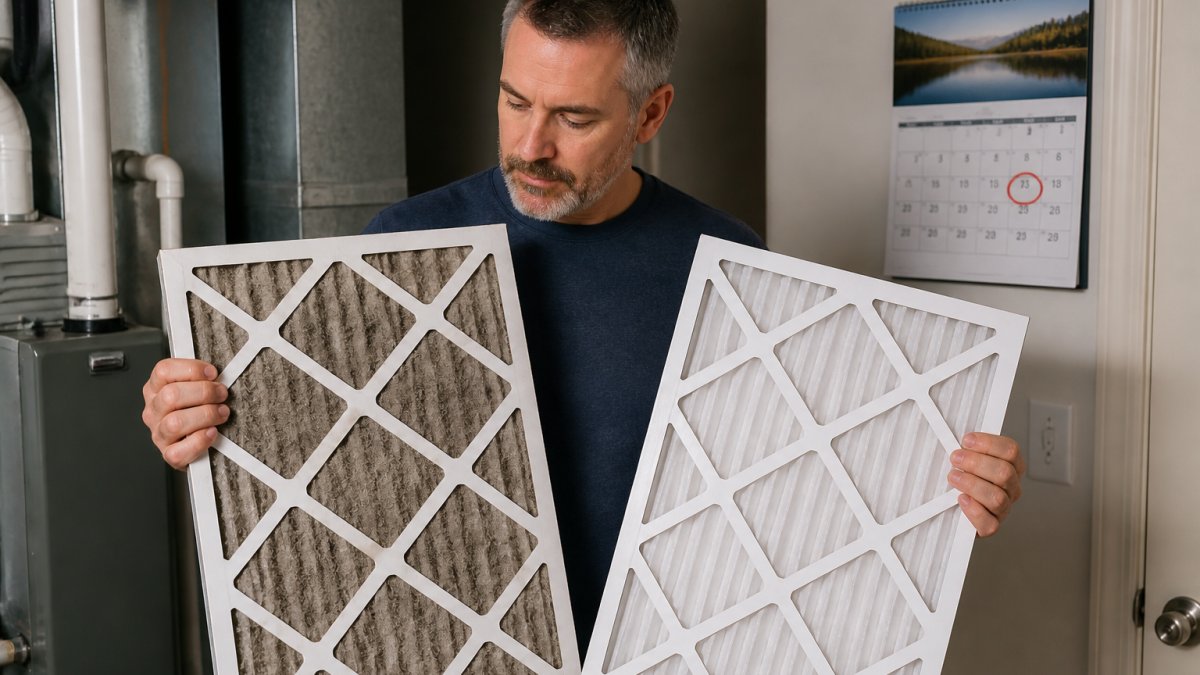
Watch for these signs it is time:
- The filter looks gray and matted
- Airflow from vents feels weak
- Dust builds up faster than usual
- Allergy symptoms spike indoors
A humidifier can help with dryness, but too much moisture feeds mold, which is its own allergy trigger. Keep indoor humidity in check.
Write the change date on the filter frame with a marker. It is the fastest way to stop guessing whether it has been one month or three.
Setting Realistic Expectations and Avoiding Common Mistakes
Filters reduce airborne allergens, but they are not a cure. Expect fewer symptoms, not zero. The reason is simple: most allergy research measures particle reduction in the air, not how much better you feel. Those are two different outcomes, and conflating them is where expectations go wrong.
What the Evidence Actually Measures
When a study reports that a purifier lowered airborne cat dander or pollen counts in a room, that is a particle-reduction result. It is real and repeatable. What is harder to prove is a matching drop in sneezing, congestion, or medication use. Symptom studies tend to be smaller, shorter, and messier because so many variables, outdoor pollen, time spent elsewhere, bedding, pets, sit outside the filter’s reach. A reasonable read of the evidence: filtration reliably cleans the air, and cleaner air tends to help, but the size of the symptom benefit varies from person to person.
Allergen-Specific Limits
Air filtration only works on what is airborne. That leaves real gaps:
- Dust mites live in bedding, mattresses, and carpet. Their allergens settle rather than float, so a filter catches little of what you actually breathe at night. Encasing bedding and washing it in hot water does more.
- Pet dander sticks to upholstery, curtains, and walls. A purifier helps the air, but surfaces keep re-releasing allergens until they are cleaned.
- Pollen that rides in on clothes, hair, and pets never passes through the filter at all.
- Mold needs a moisture fix first. A filter cannot remove a damp source.
- Food and contact allergens are not airborne triggers, so filtration does nothing for them.
This is why a filter is one layer, not the whole plan. Pair it with cleaning, humidity control, and your doctor’s advice.
Common Mistakes We See
- Buying the highest MERV rating the system cannot handle
- Letting the filter clog until airflow drops
- Ignoring bedding and carpet where allergens settle
- Expecting one purifier to clean the whole house
- Running a purifier only during attacks instead of continuously during allergy season
Allergen reduction works best as a stack of small steps, not one big fix. If your symptoms stay bad even with clean air, talk to a doctor. Filtration supports treatment, it does not replace it.
Judge a filter by what it can measure, particles removed from the air, and judge your symptoms separately. Cleaner air is a real win even when your nose does not fully agree.
Frequently Asked Questions
Do HVAC air filters help with allergies?
HVAC filters capture airborne allergens like pollen, dust, and pet dander before they recirculate through your home. A MERV 8 to MERV 13 filter provides meaningful allergen reduction, but no filter eliminates all triggers. Symptom relief depends on filter efficiency, how well your system circulates air, and how often you replace the filter. For best results, pair proper filtration with source control and regular cleaning.
What MERV rating is best for allergies?
MERV 8 to MERV 13 is the practical range for allergy relief in most homes. MERV 8 captures larger pollen and dust particles. MERV 11 to 13 adds smaller particle capture, including some bacteria and fine dust. Ratings above MERV 13 can restrict airflow in standard residential systems, so check your HVAC manufacturer’s maximum rated MERV before upgrading. Higher is not always better if your blower cannot handle the resistance.
How often should you change an air filter if you have allergies?
Change your filter every 30 to 60 days if allergies are a concern. Standard recommendations of 90 days assume average dust loads. Allergy sufferers, pet owners, and homes near heavy pollen should replace more frequently. Check the filter monthly by holding it to light. If you cannot see light through it, replace it. A clogged filter reduces airflow, strains your system, and stops capturing particles efficiently.
Can an air filter remove pollen, dust, and pet dander?
Yes, a properly rated filter captures all three. Pollen particles range from 10 to 100 microns, dust mites and their waste from 1 to 10 microns, and pet dander from 1 to 10 microns. A MERV 11 or higher filter captures a significant percentage of these particles. However, filters only clean air that passes through them. Air circulation, room layout, and the filter’s placement in your HVAC system all affect how much allergen reduction you actually achieve.
Allergy season does not have to mean constant sneezing and congestion. The right filter, changed on schedule, makes a real difference in your indoor air.
Air Secure Inc can help you choose and install filtration that fits your system, from advanced indoor air quality services to routine maintenance that keeps airflow strong. We are BBB A+ Accredited and offer 24-hour emergency heating support.
Get a quote from Air Secure Inc and start breathing cleaner air at home.